Introduction
Picture this: I was standing in my kitchen, surrounded by a mountain of fresh asparagus, a handful of salmon fillets, and a stubborn craving that refused to die. I had just finished a week of bland, overcooked fish and my taste buds were screaming for something that would make my dinner routine feel like a celebration. I grabbed a handful of ricotta, a splash of lemon, and a whisper of basil, and the idea of a bright, creamy, herbaceous stuffed salmon was born. This isn’t just another recipe; it’s a culinary revelation that turns ordinary ingredients into a show‑stopper.
The first thing you’ll notice is the aroma. As the asparagus blanched, it released a sweet, grassy scent that mingles with the sharp citrus of lemon zest and the warm, buttery fragrance of melted butter. The ricotta, when mixed with fresh basil and Parmesan, forms a silky, velvety base that coats each bite like a gentle hug. The lemon juice cuts through the richness, giving the dish a bright, zesty punch that keeps the palate refreshed. When you finally plate it, the golden crust of the salmon, the tender green spears, and the glossy, creamy filling all come together in a visual symphony that makes your eyes water with anticipation.
What sets this version apart from the countless “stuffed salmon” recipes out there is the meticulous balance of flavors and textures. The asparagus is crisp yet tender, the ricotta is light enough to carry the lemon without weighing it down, and the Parmesan adds a nutty finish that ties everything together. The Dijon mustard in the sauce adds a subtle piquant depth that elevates the dish from simple to extraordinary. I dare you to taste this and not go back for seconds.
Most people think of stuffed salmon as a fancy dinner, but I’ve stripped it down to a technique that’s both approachable and foolproof. The secret sauce is a quick, velvety blend of heavy cream, chicken broth, and a touch of Dijon that coats the salmon like velvet. The result is a moist, flavorful fillet that practically melts in your mouth. If you’re ready for a game‑changer that will become the highlight of any dinner table, let me walk you through every single step — by the end, you’ll wonder how you ever made it any other way.
What Makes This Version Stand Out
- Flavor Fusion: The combination of lemon zest, basil, and Parmesan creates a bright, herbaceous profile that cuts through the richness of salmon and ricotta.
- Texture Contrast: The crisp asparagus spears provide a satisfying bite that balances the silky ricotta filling.
- Ease of Prep: All the ingredients are pre‑measured, and the cooking steps are designed to keep you moving without getting stuck.
- Show‑Stopper Presentation: The golden crust and vibrant green spears make for a dish that looks as good as it tastes.
- Crowd‑Pleaser: Friends and family will rave about the fresh flavors and the unexpected burst of citrus.
- Versatile Base: Swap the salmon for cod or halibut, and you still get the same delicious outcome.
- Make‑Ahead Friendly: The stuffed fillets can be assembled ahead of time and baked right before serving.
- Nutritious: Packed with protein, healthy fats, and fresh vegetables, it’s a balanced meal that satisfies.
Alright, let’s break down exactly what goes into this masterpiece…
Inside the Ingredient List
The Flavor Base
At the heart of this dish lies the sauce that marries all the components. Heavy cream gives it a luscious, silky texture, while chicken broth adds depth without overpowering the fish. Dijon mustard introduces a subtle kick that complements the lemon zest. If you’re lactose intolerant, swap the heavy cream for coconut milk, but keep the mustard to maintain that bright edge. The sauce is what ties the salmon and the filling together, so don’t skip it.
The Texture Crew
Fresh asparagus spears are the unsung heroes of this recipe. Their bright green color and firm bite provide a contrast to the creamy ricotta. Blanching them just until they’re bright and slightly tender preserves their crunch and locks in flavor. If you can’t find fresh asparagus, frozen works, but make sure to thaw and squeeze out excess moisture before stuffing.
The Unexpected Star
Ricotta cheese is the secret weapon that gives the dish its creamy, airy quality. It’s lighter than cream cheese, so it doesn’t weigh down the salmon. Adding fresh basil and grated Parmesan not only boosts flavor but also adds a subtle nutty undertone. A pinch of garlic powder and onion powder rounds out the seasoning, ensuring each bite is packed with savory depth.
The Final Flourish
Lemon zest and fresh lemon juice provide a citrusy brightness that cuts through the richness of the fish and the cream. Olive oil is used to sear the salmon, giving it a beautiful golden crust. Butter and a splash of chicken broth finish the sauce, creating a glossy glaze that makes the dish look restaurant‑ready. Salt and pepper are essential, but be generous with the pepper; it adds a nice, aromatic finish.
Everything's prepped? Good. Let's get into the real action…
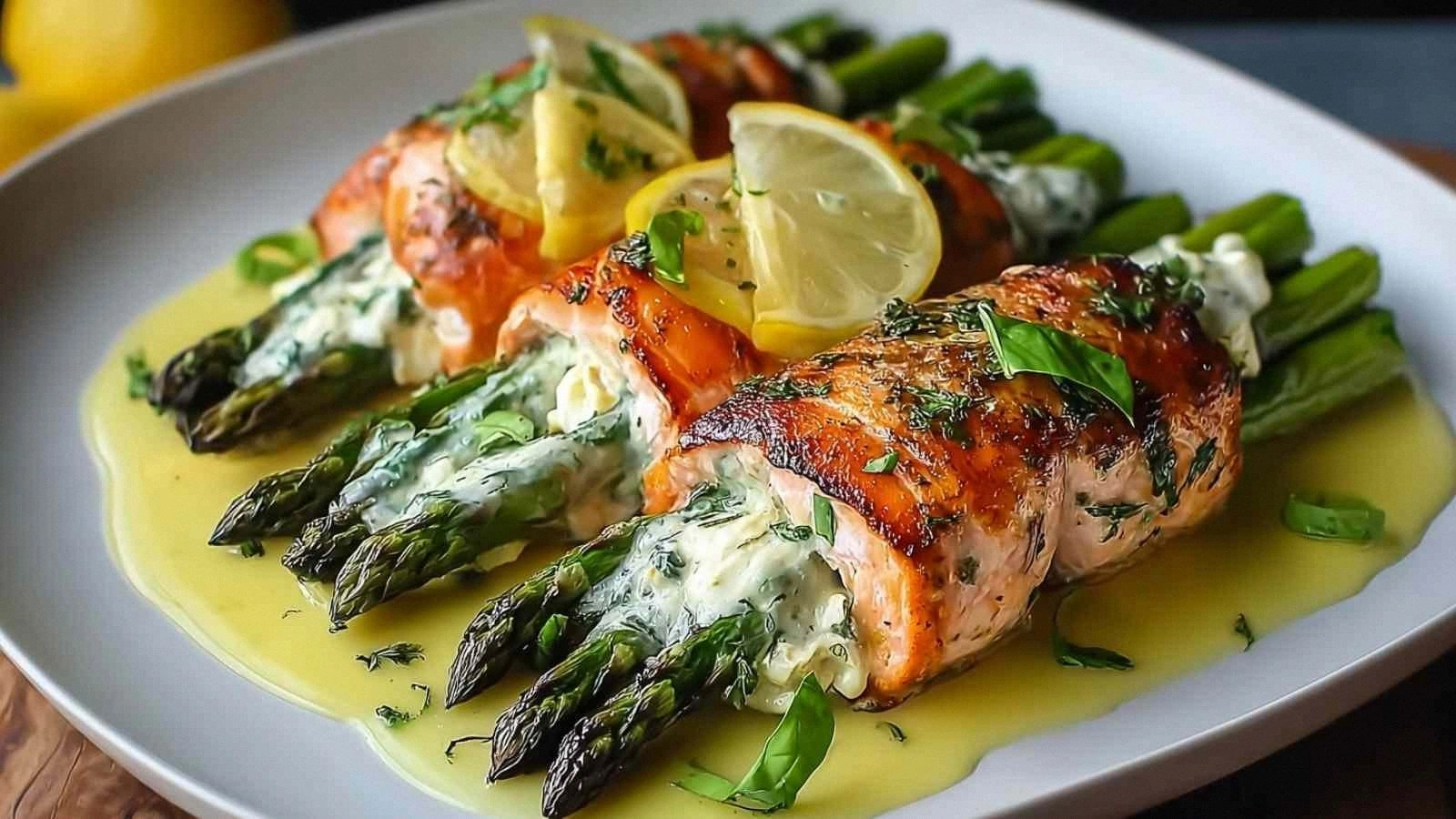
The Method — Step by Step
- Prep the asparagus: Trim the woody ends of the 20 spears and blanch them in boiling salted water for 2 minutes. Immediately transfer them to an ice bath to stop the cooking process. This technique locks in the bright green color and crisp texture that will pop in every bite.
- Make the ricotta filling: In a bowl, combine 1 cup ricotta, 0.5 cup fresh basil, 1 tablespoon lemon zest, 1 tablespoon lemon juice, 0.5 teaspoon garlic powder, 0.5 teaspoon onion powder, and 0.25 cup grated Parmesan. Mix until smooth. This filling is creamy, herbaceous, and has a subtle citrus lift that will shine through the salmon.
- Stuff the salmon: Lay each of the 4 salmon fillets flat on a cutting board. Spread a thin layer of the ricotta mixture over each fillet, then arrange 5 asparagus spears on top. Roll each fillet tightly, securing with a toothpick if necessary.
- Season the fillets: Drizzle 1 tablespoon olive oil over the rolled fillets, then season with salt and a generous pinch of pepper. The oil helps create a golden crust during baking, while the pepper adds a subtle aromatic note.
- Preheat the oven: Set your oven to 400°F (200°C) and line a baking sheet with parchment paper. A hot oven ensures the salmon cooks evenly and the crust forms beautifully.
- Bake the salmon: Place the rolled fillets seam‑side down on the prepared sheet. Bake for 12–15 minutes, or until the salmon flakes easily with a fork and the filling is warm. The sauce should bubble gently, and the edges will start pulling away, signaling that it’s ready.
- Prepare the glaze: While the salmon bakes, combine 0.25 cup heavy cream, 0.5 cup chicken broth, 2 tablespoons butter, 2 teaspoons Dijon mustard, 1 tablespoon lemon juice, and 1 tablespoon fresh parsley in a small saucepan. Simmer over medium heat until the butter melts and the sauce thickens slightly, creating a glossy glaze.
- Finish the dish: Remove the salmon from the oven and carefully take out the toothpicks. Brush the glaze over each fillet, letting it coat the surface and the asparagus. Serve immediately with a drizzle of extra lemon zest for a final burst of brightness.
- Optional garnish: Sprinkle a pinch of fresh parsley and a few extra Parmesan shavings for a touch of color and flavor. This final touch elevates the dish from delicious to unforgettable.
That's it — you did it. But hold on, I've got a few more tricks that'll take this to another level…
Insider Tricks for Flawless Results
The Temperature Rule Nobody Follows
Many cooks assume that salmon always needs a high heat, but a moderate 400°F is actually optimal for this dish. It ensures the fillet cooks evenly while preserving moisture. If you’re using a convection oven, reduce the temperature by 25°F to avoid over‑drying.
Why Your Nose Knows Best
Before you finish the glaze, give it a quick sniff. The aroma of melted butter and Dijon should be unmistakably savory. If it smells too buttery, lower the heat slightly or let it simmer a bit longer to reduce excess oil.
The 5-Minute Rest That Changes Everything
After baking, let the salmon rest for exactly five minutes. This allows the juices to redistribute, ensuring every bite is juicy and flavorful. The rest period also lets the glaze thicken to the perfect consistency.
Keep the Asparagus Crisp
To avoid soggy spears, place the asparagus on a wire rack in the oven after the salmon is done. A quick 2–3 minute pass at 400°F will crisp the ends without overcooking the fish.
Glaze Consistency Matters
When the glaze thickens to a syrupy consistency, brush it over the salmon. If it’s too thin, let it simmer a bit longer; if it’s too thick, add a splash of chicken broth to loosen it.
Creative Twists and Variations
This recipe is a playground. Here are some of my favorite ways to switch things up:
Spinach and Goat Cheese Swap
Replace the asparagus with sautéed spinach and swap ricotta for goat cheese. The tangy goat cheese adds a creamy depth that pairs wonderfully with lemon.
Smoky Chipotle Version
Add a pinch of chipotle powder to the ricotta filling for a smoky heat that contrasts the citrus. Serve with a side of corn salsa to balance the flavors.
Vegetarian Portobello Delight
Use large Portobello mushroom caps instead of salmon. Stuff them with the ricotta mixture and bake at 375°F for 20 minutes.
Herb‑Infused White Wine Sauce
After baking, deglaze the pan with a splash of white wine, reduce, and swirl in a handful of fresh herbs for a luxurious sauce.
Gluten‑Free Crust
Crush almond flour and lightly coat the fillets before baking. The nutty crust adds a crunchy texture that complements the creamy filling.
Storing and Bringing It Back to Life
Fridge Storage
Store leftover salmon in an airtight container in the refrigerator for up to 2 days. Keep the glaze separate; add it back just before reheating.
Freezer Friendly
Wrap each stuffed fillet tightly in foil and freeze for up to 3 months. Thaw overnight in the refrigerator before reheating.
Best Reheating Method
Reheat in a preheated oven at 350°F for 10–12 minutes. Add a splash of water or broth before reheating to steam the salmon back to perfection and keep it moist.