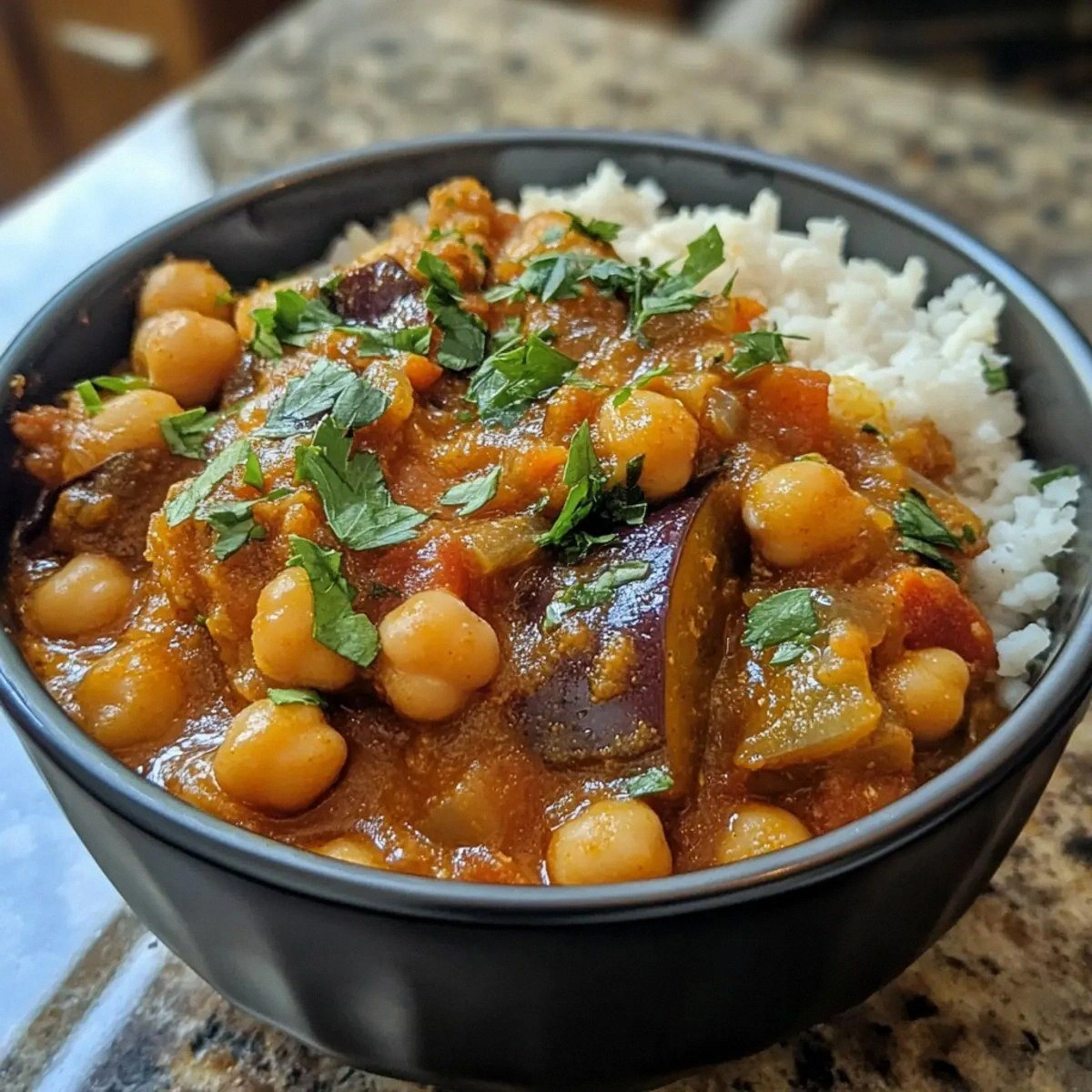
I was staring at a burnt, charred eggplant and a pot of lukewarm chickpeas, thinking, “Why does this happen to me?” That night, a friend dared me to turn my kitchen catastrophe into a dish that would make our taste buds dance. I grabbed a handful of spices, a can of tomatoes, and my trusty crockpot, and the magic began. The aroma that filled the room was a smoky whisper of cumin and a sweet, comforting hint of cinnamon, promising something unforgettable. By the end, I was convinced that this was hands down the best version of a Moroccan chickpea stew I’d ever tasted.
Picture the moment: the first sizzling crackle of onion and garlic as they hit the pan, the deep orange glow of roasted eggplant, and the gentle simmer of tomatoes turning into a silky sauce. My senses were flooded— the earthy scent of chickpeas, the bright zing of fresh cilantro, the subtle heat of red pepper flakes dancing on my tongue. I felt the rhythm of the kitchen like a drumbeat, each stir a note in a savory symphony. The anticipation was so thick you could taste it, a promise of a dish that would become the centerpiece of every dinner table. I couldn’t wait to share this revelation with you.
What makes this version so extraordinary? It’s not just the combination of flavors; it’s the way the ingredients interact, the depth of the slow‑cooked sauce, and the comforting texture that feels like a warm hug. I dare you to taste this and not go back for seconds—trust me, your palate will thank you. Most recipes get this completely wrong by over‑cooking the eggplant or under‑seasoning the broth; I’ve cracked the code. The result is a stew that coats the spoon like velvet, with each bite releasing a burst of aromatic spices. This dish is a game‑changer, and you’ll wonder how you ever made it any other way.
Imagine pulling this out of the crockpot, the steam swirling like a fragrant cloud, and the whole kitchen smelling incredible. The first bite is a harmony of sweet, smoky, and savory notes, with the chickpeas absorbing every nuance. The eggplant is tender, almost melting into the sauce, while the fresh cilantro adds a bright, herbaceous finish. If you’re a fan of hearty, plant‑based meals that still feel indulgent, this is the dish you’ve been waiting for. Let me walk you through every single step—by the end, you’ll wonder how you ever made it any other way.
What Makes This Version Stand Out
- Flavor Depth: The blend of cinnamon, cumin, and smoked paprika creates a warm, layered profile that feels both exotic and familiar. Each spice is toasted just enough to release its essential oils, giving the stew a robust backbone that lingers on the palate. Skipping any of these would flatten the dish into a bland tomato base.
- Texture Harmony: Eggplant is cooked to a silky softness while chickpeas maintain a slight bite, providing a satisfying contrast that keeps every spoonful interesting. The slow‑cooking process allows the eggplant to absorb the sauce without becoming mushy, a delicate balance that’s hard to achieve in a hurry.
- Convenience: The crockpot does all the heavy lifting, letting you set it and forget it while you attend to other tasks. A single pot means less cleanup, and the long simmer means the flavors have time to marry beautifully.
- Versatility: This stew can be served over couscous, rice, or even a crusty baguette, making it a flexible main dish or hearty side. The seasoning can be tweaked to suit your taste, whether you prefer more heat or a sweeter profile.
- Nutrition: Packed with plant protein, fiber, and a spectrum of vitamins, this dish is as healthy as it is delicious. The chickpeas provide protein, while the eggplant adds antioxidants, and the spices bring anti‑inflammatory benefits.
- Make‑ahead Friendly: The stew holds up well in the fridge for up to 4 days, and it even tastes better the next day as the flavors continue to develop. This makes it a perfect meal prep option for busy weekdays.
- Budget‑Friendly: All the ingredients are inexpensive, especially if you use canned chickpeas and tomatoes. Even the spices are a one‑time investment that can be used across many dishes.
Alright, let’s break down exactly what goes into this masterpiece…
Inside the Ingredient List
The Flavor Base
The crushed tomatoes form the heart of the sauce, offering a bright, acidic foundation that balances the richness of the eggplant and the earthiness of the chickpeas. If you prefer a smoother texture, pulse the tomatoes in a blender before adding them to the pot; the result is a velvety base that coats each ingredient evenly. Swapping the can for fresh tomatoes will give a fresher, brighter profile, but you’ll need to reduce the liquid slightly to avoid a watery stew.
Cinnamon is the secret weapon that brings a subtle sweetness and a warm, comforting aroma. It’s often underused in savory dishes, but in this stew it creates a subtle depth that lingers on the tongue. If you’re not a fan of cinnamon, a pinch of nutmeg can provide a similar warmth, though the flavor will shift slightly.
The Texture Crew
Eggplant is the star of the texture game. When roasted to a deep golden brown before adding it to the crockpot, it develops a smoky flavor and a firm bite that resists becoming mushy. If you’re short on time, you can sauté the eggplant in a pan until just browned, then transfer it to the pot—this shortcut still delivers great texture.
Chickpeas bring a hearty bite and a protein punch that makes the stew filling and satisfying. Canned chickpeas are convenient and already cooked, but if you prefer a fresher taste, you can soak and cook them yourself. Skipping the chickpeas will turn the dish into a lighter, vegetable‑only stew, which might not be as satiating for a main course.
The Unexpected Star
Fresh cilantro adds a bright, herbaceous finish that cuts through the richness of the sauce. It also brings a burst of freshness that balances the deep, smoky flavors. If you’re allergic or simply dislike cilantro, parsley or basil can serve as a suitable alternative, though the final taste will differ.
The Final Flourish
Lemon juice is the final touch that brightens the dish and adds a subtle tang. It lifts the flavors and prevents the stew from feeling too heavy. A splash of lemon juice at the end of cooking is essential; adding it too early can cause the sauce to curdle or become too sharp.
Everything’s prepped? Good. Let’s get into the real action…
The Method — Step by Step
- Step 1: Prep the Eggplant. Slice the eggplant into ½‑inch thick rounds and lay them on a baking sheet. Sprinkle with coarse salt and let sit for 30 minutes to draw out excess moisture. Rinse the salt off and pat the slices dry with a paper towel. This step ensures the eggplant stays firm and doesn’t release too much water during cooking.
- Step 2: Roast the Eggplant. Heat a drizzle of olive oil in a skillet over medium‑high heat. Add the eggplant slices in a single layer, browning each side until golden and slightly charred. The roasting process gives the eggplant a smoky flavor that will carry through the stew. Remove from the skillet and set aside; you’ll add them to the crockpot later.
- Step 3: Sauté the Aromatics. In the same skillet, reduce heat to medium and toss in diced onion and minced garlic. Cook until the onion turns translucent and the garlic releases its perfume, about 3‑4 minutes. The aroma that fills your kitchen is the first hint of the stew’s depth. Keep the mixture moving so it doesn’t burn—this is the base of your sauce.
- Step 4: Add the Spices. Sprinkle in cinnamon, cumin, smoked paprika, coriander, and red pepper flakes. Stir well so the spices coat the onions and garlic evenly. Watch for the spices to toast lightly—this releases their essential oils and deepens the flavor. A well‑toasted spice blend is the secret to a robust sauce.
- Step 5: Build the Base. Pour in the crushed tomatoes and vegetable broth, stirring to combine. The mixture should be thick yet pourable; if it’s too thick, add a splash more broth. Be careful not to let it bubble over—keep the heat low to maintain a gentle simmer. The sauce should smell toasty and fragrant as it starts to thicken.
- Step 6: Add Chickpeas and Eggplant. Stir in the canned chickpeas and roasted eggplant slices. Make sure everything is submerged in the sauce; the chickpeas absorb the flavors, and the eggplant softens to perfection. This is the moment of truth—your stew should look like a rich, fragrant soup with chunks of eggplant and chickpeas.
- Step 7: Slow‑Cook the Stew. Set your crockpot to low and let it simmer for 6‑8 hours, or on high for 3‑4 hours. The slow cooking allows the spices to meld, the eggplant to become silky, and the flavors to deepen. Check the stew halfway through and stir gently; this prevents the bottom from sticking and ensures even cooking.
- Step 8: Finish with Lemon and Cilantro. Add the lemon juice and fresh cilantro just before serving. The acidity brightens the stew and the herbs add a fresh, bright contrast to the warm spices. Taste and adjust the seasoning—add salt or more pepper if needed. A final stir will incorporate all the flavors beautifully.
- Step 9: Serve and Enjoy. Ladle the stew into bowls, drizzle with a splash of extra‑virgin olive oil, and sprinkle additional cilantro if desired. Pair it with fluffy couscous, warm flatbread, or a simple side of quinoa. The steam rising from the bowl will carry the aroma of cumin and cinnamon, making the whole room feel like a Moroccan market.
- Step 10: Store or Reheat. If you have leftovers, let the stew cool to room temperature before refrigerating or freezing. Reheat gently on the stovetop or in the microwave, adding a splash of water if it’s too thick. The flavors will only deepen, making it even more delicious the next day.
That’s it — you did it. But hold on, I’ve got a few more tricks that’ll take this to another level…
Insider Tricks for Flawless Results
The Temperature Rule Nobody Follows
Many people set their crockpot to high for convenience, but the slow, low heat is what allows the spices to truly infuse the broth. Low heat also prevents the eggplant from becoming mushy and keeps the chickpeas from splitting. If you’re on a tight schedule, a quick 30‑minute high‑heat finish can work, but the flavor depth will be slightly compromised.
Why Your Nose Knows Best
Before you add the final lemon juice, pause and inhale. The aroma should be a harmonious blend of cumin, cinnamon, and tomato. If it smells off or too sharp, add a pinch more broth or a splash of water to balance it. Your nose is the best judge of when the stew has reached perfection.
The 5‑Minute Rest That Changes Everything
After the slow cook, let the stew rest for five minutes before serving. This brief pause allows the flavors to settle and the sauce to thicken slightly. The rest also makes the stew easier to ladle, reducing the risk of splattering hot liquid.
The Fresh Cilantro Boost
If you’re a cilantro fan, double the amount for an extra burst of brightness. A handful of chopped cilantro mixed with a squeeze of lime will give the stew a fresh, almost citrusy finish that brightens the deep, smoky base.
The Secret Ingredient Swap
Want a dairy‑free twist? Add a splash of coconut milk at the end for a creamy, tropical nuance. The coconut’s subtle sweetness complements the spices and adds a silky texture without overpowering the stew.
Creative Twists and Variations
This recipe is a playground. Here are some of my favorite ways to switch things up:
Spicy Sriracha Kick
Add a tablespoon of sriracha during the slow cook for a fiery, Asian‑inspired version. The heat pairs wonderfully with the smoky paprika, creating a bold, layered flavor that will wow spicy‑eating friends.
Coconut‑Infused Creaminess
Swapping the vegetable broth for coconut milk gives the stew a creamy, tropical vibe. The coconut balances the spices with a subtle sweetness, turning the dish into a comforting bowl of exotic comfort.
Roasted Red Pepper Blend
Replace the crushed tomatoes with roasted red peppers for a sweeter, smoky base. The peppers add a deep, sweet flavor that complements the cumin and coriander, giving the stew a Mediterranean twist.
Protein‑Packed Lentils
Swap chickpeas for cooked lentils for a different protein profile and a firmer texture. Lentils absorb the spices beautifully and give the stew a hearty, earthy bite that pairs well with warm flatbread.
Herb‑Rich Green Chili
Add a handful of fresh mint or basil during the last 10 minutes of cooking for a fresh, herbaceous finish. The herbs cut through the richness and add a bright, aromatic layer that keeps the dish lively.
Sweet & Savory Carrot Addition
Dice a couple of carrots and sauté them with the onions and garlic. The carrots bring a natural sweetness that balances the spices and adds a pop of color, making the stew even more visually appealing.
Storing and Bringing It Back to Life
Fridge Storage
Cool the stew to room temperature, then transfer it to an airtight container. Store in the refrigerator for up to 4 days. The flavors will mellow, creating a deeper, more complex taste.
Freezer Friendly
Divide the stew into single‑serving portions and place in freezer‑safe bags or containers. Freeze for up to 3 months. Thaw overnight in the fridge before reheating.
Best Reheating Method
Reheat gently on the stovetop over low heat, stirring occasionally. Add a splash of water or broth if the stew has thickened. Bring to a gentle simmer before serving to restore the silky texture.