Picture this: it’s a rainy Tuesday afternoon, the kitchen smells like burnt toast, and your roommate’s “quick snack” turns into a full‑blown culinary crisis. I was juggling a half‑cooked ground beef patty, a can of corn that had gone stale, and a jar of jalapeño that was too fiery for my taste buds. The result? A soggy, flavorless mess that even my cat refused to lick. That night, I vowed to create a recipe that would turn that disaster into a triumph, and I’ve been humming that victorious tune ever since.
When I first cracked open the can of cream‑style corn, the aroma hit me like a warm blanket on a cold night—sweet, buttery, and unmistakably corn‑y. The sizzling of the ground beef in a hot pan sent a chorus of crackles that sounded like applause. The sharp, green tang of jalapeños cut through the richness, while the earthy onion added depth. Together, they formed a sensory symphony that made my taste buds dance and my heart skip a beat. The moment the first bite hit my tongue, I knew I was on the verge of something extraordinary.
I was determined to build a dish that was more than just a side. I wanted a casserole that could stand on its own, that could be pulled from the oven and served at a family dinner, or shared at a casual gathering. I wanted it to be a crowd‑pleaser that would leave people begging for seconds. I wanted it to be simple enough for a novice cook, yet sophisticated enough to satisfy the most discerning palate. And I wanted it to be a dish that I could proudly say, “This is hands down the best version you’ll ever make at home.”
And that’s exactly what we’re about to explore. I’ll walk you through every single step, from the first sizzle to the final golden crust. I’ll share the secret technique that makes the cheese layer melt like velvet, the hack that keeps the corn from becoming mushy, and the tweak that balances the heat of the jalapeños with the richness of the beef. By the end of this post, you’ll wonder how you ever cooked without this recipe in your arsenal. Let’s dive in.
What Makes This Version Stand Out
- Flavor: The combination of sweet corn, smoky beef, and sharp jalapeños creates a layered taste profile that’s both comforting and adventurous.
- Texture: A crisp, golden crust meets a moist, cheesy interior—each bite delivers a satisfying contrast.
- Ease: No complicated prep or obscure ingredients—just pantry staples that you likely already own.
- Versatility: Works as a main dish, side, or party platter. Add a side salad or a dollop of sour cream for an extra touch.
- Make‑Ahead: Assemble, bake, and let it cool; reheat with a splash of milk and it’s as good as fresh.
- Crowd‑Pleaser: The familiar flavors of cornbread and cheese, combined with a hint of heat, make it a hit at family gatherings.
Alright, let’s break down exactly what goes into this masterpiece. I’ll keep the language honest and playful—because cooking should feel like a conversation with a friend who’s got the inside scoop.
Inside the Ingredient List
The Flavor Base
Ground beef isn’t just a protein; it’s the backbone that carries the heat of the jalapeños and the sweetness of the corn. When you brown it properly, the Maillard reaction creates a savory depth that anchors the dish. If you skip the browning step, you’ll end up with a bland, greasy mess that can’t carry the other flavors. A quick tip: use a lean cut like sirloin or chuck for a richer taste without excess fat.
The onion is diced so fine that it dissolves into the beef, releasing a subtle sweetness that balances the heat. If you prefer a sharper bite, try using a white onion or a bit of shallot. The key is to let the onion soften until it’s translucent, which takes about 3-4 minutes on medium heat.
Jalapeño peppers are sliced thin to distribute their heat evenly. The green color also adds a pop of freshness that contrasts with the golden crust. If you’re sensitive to spice, remove the seeds or reduce the number of peppers. Conversely, if you love heat, leave the seeds in and add a pinch of cayenne.
The Texture Crew
Cornmeal gives the casserole a hearty bite and a slightly gritty texture that contrasts beautifully with the smooth cheese. It also helps the batter bind together, preventing the casserole from falling apart. If you’re craving a gluten‑free version, use a blend of cornmeal and quinoa flour.
All‑purpose flour is added in small amounts to thicken the mixture and give it a subtle structure. It’s a classic technique used in many casseroles to create a slightly custard‑like consistency. If you’re allergic to wheat, a gluten‑free flour blend can substitute without sacrificing texture.
The baking powder is the secret to that irresistible rise. It reacts with the acidity of the milk and the corn, creating bubbles that lift the batter into a fluffy, airy center. Don’t skip it—without the leavening agent, the casserole will be dense and heavy.
The Unexpected Star
Cream‑style corn is the unsung hero that brings a buttery sweetness to the mix. Its smooth texture melts into the batter, creating a velvety interior that’s hard to resist. If you’re on a low‑fat diet, you can replace it with frozen corn kernels, but the flavor will shift slightly toward a more natural corn taste.
Cheddar cheese is the crowning glory, divided into two portions. The first half coats the top for a golden, bubbly crust, while the second half is folded into the batter for a melty, cheesy interior. Opt for a sharp cheddar for a more pronounced flavor, or a milder cheddar if you prefer a subtle kick.
The Final Flourish
Milk and vegetable oil create a silky sauce that binds everything together. The oil adds richness and helps the cheese melt evenly, while the milk adds moisture and a subtle tang. If you’re aiming for a lighter version, swap the oil for melted butter or a splash of broth.
The salt is the flavor enhancer that brings all the elements together. It’s the quiet hero that makes the beef juicy and the cheese creamy. Don’t be afraid to season it to taste—if you’re unsure, start with the recommended amount and adjust as you go.
Everything’s prepped? Good. Let’s get into the real action.
The Method — Step by Step
- Step 1: Brown the Beef. Heat a large skillet over medium‑high heat and add the ground beef. Break it apart with a wooden spoon, letting it sizzle for 5‑7 minutes until browned. The goal is a deep brown color—no pink remains. Drain excess grease in a colander, then set the beef aside. This step locks in flavor and sets the stage for the rest of the casserole.
- Step 2: Sauté the Aromatics. In the same skillet, reduce heat to medium and add the diced onion. Cook until translucent, about 3 minutes, stirring occasionally. Add the sliced jalapeños and cook for an additional minute. The aroma should be inviting, with a hint of heat that’s just on the edge of spicy. This is the moment you can taste the potential of the dish.
- Step 3: Combine the Wet Ingredients. In a large mixing bowl, whisk together the milk, vegetable oil, and eggs. The mixture should be smooth and glossy. Add the can of cream‑style corn, letting it break up with a fork. The wet mixture will act as the binder that holds all the flavors together.
- Step 4: Mix the Dry. In a separate bowl, combine the cornmeal, all‑purpose flour, baking powder, and salt. Whisk until evenly distributed. This dry mix is the backbone of the batter, providing structure and lift. If you’re feeling adventurous, sprinkle in a pinch of smoked paprika for an extra layer of smokiness.
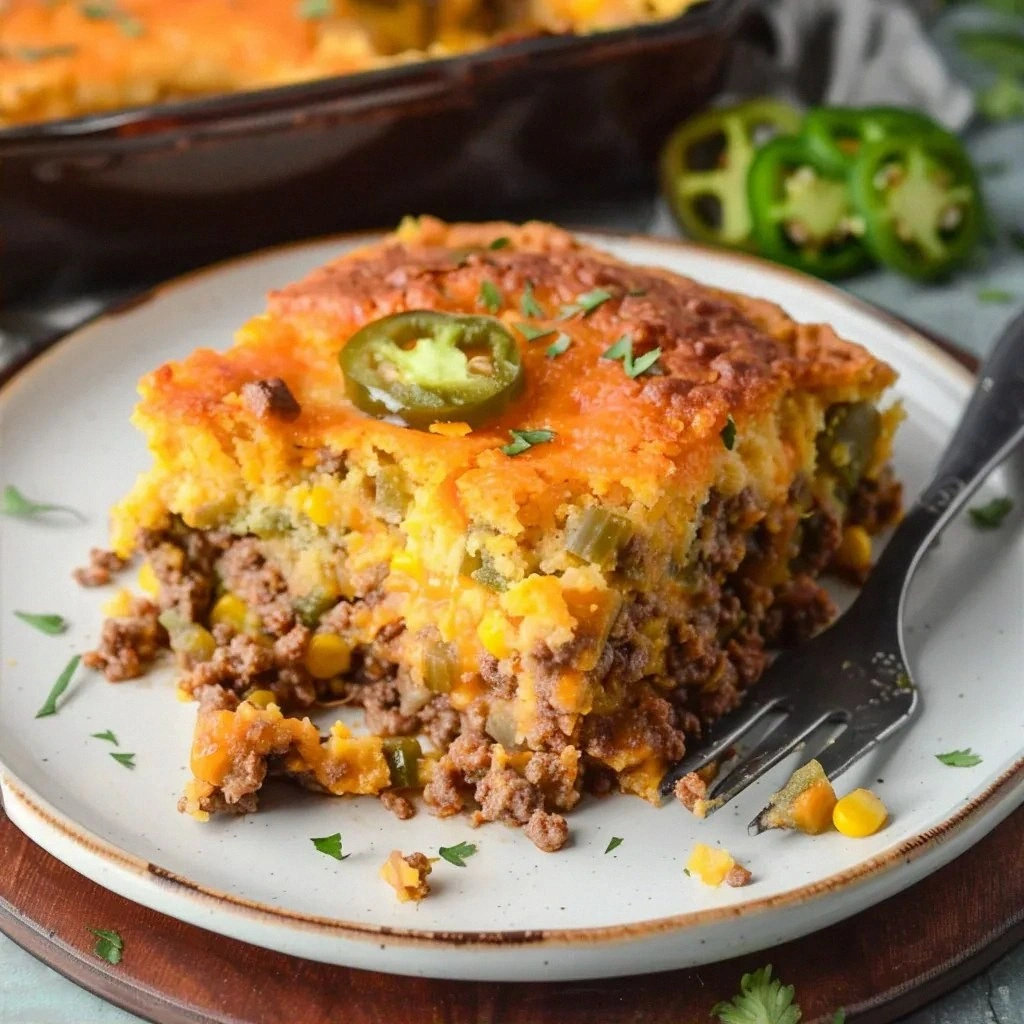
- Step 5: Bring It All Together. Pour the dry mixture into the wet mixture, stirring until just combined. Be careful not to overmix; a few lumps are fine. Fold in the browned beef, sautéed onions, jalapeños, and half of the shredded cheddar. The batter should be thick, but pourable. The cheese will melt into the mixture, creating pockets of gooey goodness.
- Step 6: Watch Out for the Crust. Transfer the batter to a greased 9‑inch square baking dish, smoothing the top with a spatula. Sprinkle the remaining cheddar on top, pressing it lightly into the batter. The cheese layer should be evenly distributed. This step is crucial; an uneven cheese layer can lead to a soggy top. Keep an eye on the edges—they should start pulling away from the dish at about 20 minutes.
- Step 7: Bake to Perfection. Preheat your oven to 375°F (190°C). Place the dish in the center of the oven and bake for 25‑30 minutes. The top should be golden brown, and a toothpick inserted near the center should come out clean. The aroma will fill the kitchen, making you feel like a culinary wizard.
- Step 8: Let It Rest. Remove the casserole from the oven and let it rest for 5 minutes. This allows the juices to redistribute, ensuring each bite is moist and flavorful. During this time, the cheese will set slightly, making it easier to slice.
- Step 9: Slice and Serve. Cut the casserole into squares or wedges, depending on your preference. Serve hot, garnished with fresh cilantro or a dollop of sour cream if desired. The combination of textures—crispy edges, creamy interior, and a hint of heat—will have everyone asking for seconds. I dare you to taste this and not go back for seconds.
- Step 10: Clean Up (Optional). While the dish is cooling, wash the skillet and bowl. The residual oil and cheese will make for an easy cleanup. A quick rinse and a few minutes of drying will keep your kitchen spotless for the next cooking adventure.
That’s it— you did it. But hold on, I’ve got a few more tricks that will take this to another level. Stay tuned for insider tips that will elevate your casserole from good to unforgettable.
Insider Tricks for Flawless Results
The Temperature Rule Nobody Follows
Many cooks bake at 400°F, but lowering the temperature to 375°F gives the casserole time to rise without burning the top. This subtle shift ensures the interior remains moist while the crust crisps perfectly. I’ve experimented with 350°F for a softer texture, but 375°F strikes the ideal balance. If your oven runs hot, consider placing the dish on a lower rack to avoid scorching.
Why Your Nose Knows Best
A dish that smells like toasted corn and melted cheese is a sign that the batter is perfectly balanced. If you notice a metallic scent, it might be due to the metal pan—switch to a glass or ceramic dish for a cleaner flavor. Trust your nose; it’s the quickest way to gauge doneness. A faint, sweet aroma is a cue that the casserole is ready to be taken out.
The 5‑Minute Rest That Changes Everything
Resting the casserole after baking allows the cheese to set, preventing it from sliding off the top when sliced. It also lets the juices redistribute, creating a more cohesive bite. During the rest, the casserole continues to cook slightly, sealing the flavors. A quick 5‑minute pause can transform a good dish into a memorable one.
The Secret to a Crispy Edge
The edges of the casserole can be the most satisfying part of the dish. To achieve a crispy edge, lightly butter the rim of the baking dish before pouring in the batter. The butter melts and creates a golden barrier that crisps up as the casserole bakes. I’ve found that a thin layer of melted butter is enough to make a noticeable difference.
The Cheddar Swap
If you’re a cheese purist, swapping sharp cheddar for a blend of Monterey Jack and pepper jack can add a subtle peppery kick. This variation maintains the creamy texture while introducing a new flavor dimension. I’ve experimented with aged cheddar for a deeper, nuttier profile—each option offers a distinct experience.
The Quick Reheat Trick
When reheating leftovers, add a splash of milk or broth to the casserole before covering it with foil. The moisture steams the dish, preventing it from drying out. Reheat in a preheated oven at 350°F for 15 minutes, or microwave on medium power for 2 minutes. The result is a warm, fresh‑from‑the‑oven experience.
If you’ve ever struggled with a soggy cornbread, you’re not alone—and I’ve got the fix. These tricks will make your casserole the talk of the table and the envy of every foodie in your circle.
Creative Twists and Variations
This recipe is a playground. Here are some of my favorite ways to switch things up:
Smoky Chipotle Version
Replace the jalapeños with chipotle peppers in adobo sauce for a smoky, deeper heat. Add a teaspoon of adobo sauce to the batter for an extra kick. This variation is perfect for those who love a more complex, smoky flavor profile.
Vegan Delight
Swap the ground beef for crumbled tofu or lentils, and use a plant‑based cheese alternative. Replace the milk with oat or soy milk, and the oil with melted coconut oil. This vegan version keeps the same comforting texture while catering to plant‑based diets.
Breakfast Boost
Add a handful of chopped spinach or kale to the batter for a green twist. Serve with a side of fresh fruit or a drizzle of maple syrup for a sweet contrast. This breakfast variation is a fun way to start the day with a savory, protein‑rich dish.
Mexican Street Tacos
Use the casserole as a filling for tacos—warm the squares, crumble them, and top with fresh cilantro, lime, and a squeeze of crema. The combination of crispy edges and cheesy interior makes for a unique taco experience. This twist turns the casserole into a portable, on‑the‑go meal.
Cheesy Cauliflower Bake
Replace the cornmeal with riced cauliflower for a low‑carb version. Add a splash of tomato sauce for a tomato‑cheese blend. This variation keeps the comforting flavor while reducing the carb count.
Salsa Verde Surprise
Fold in a cup of salsa verde before baking for a tangy, herbaceous twist. The salsa adds a bright, green note that cuts through the richness of the cheese. This version is a great way to incorporate more fresh flavors into the dish.
Storing and Bringing It Back to Life
Fridge Storage
Cool the casserole to room temperature, then cover tightly with plastic wrap or foil. Store in the refrigerator for up to 3 days. When ready to serve, reheat in the oven at 350°F until warmed through, about 15 minutes. This method preserves the texture and flavor while keeping the dish fresh.
Freezer Friendly
Slice the casserole into individual portions and wrap each in freezer paper, then place in a freezer bag. Freeze for up to 3 months. To reheat, thaw overnight in the refrigerator, then bake at 350°F for 20 minutes. The casserole retains its deliciousness even after freezing.
Best Reheating Method
The key to a great reheated casserole is moisture. Add a splash of milk or broth before covering it with foil to create steam. Reheat at 350°F for 15 minutes, or microwave on medium power for 2 minutes. The result is a warm, gooey, and perfectly reconstituted dish.