Love this? Pin it for later! 📌
Why This Recipe Works
- One pan wonder: Everything cooks together—no extra skillets or timing gymnastics.
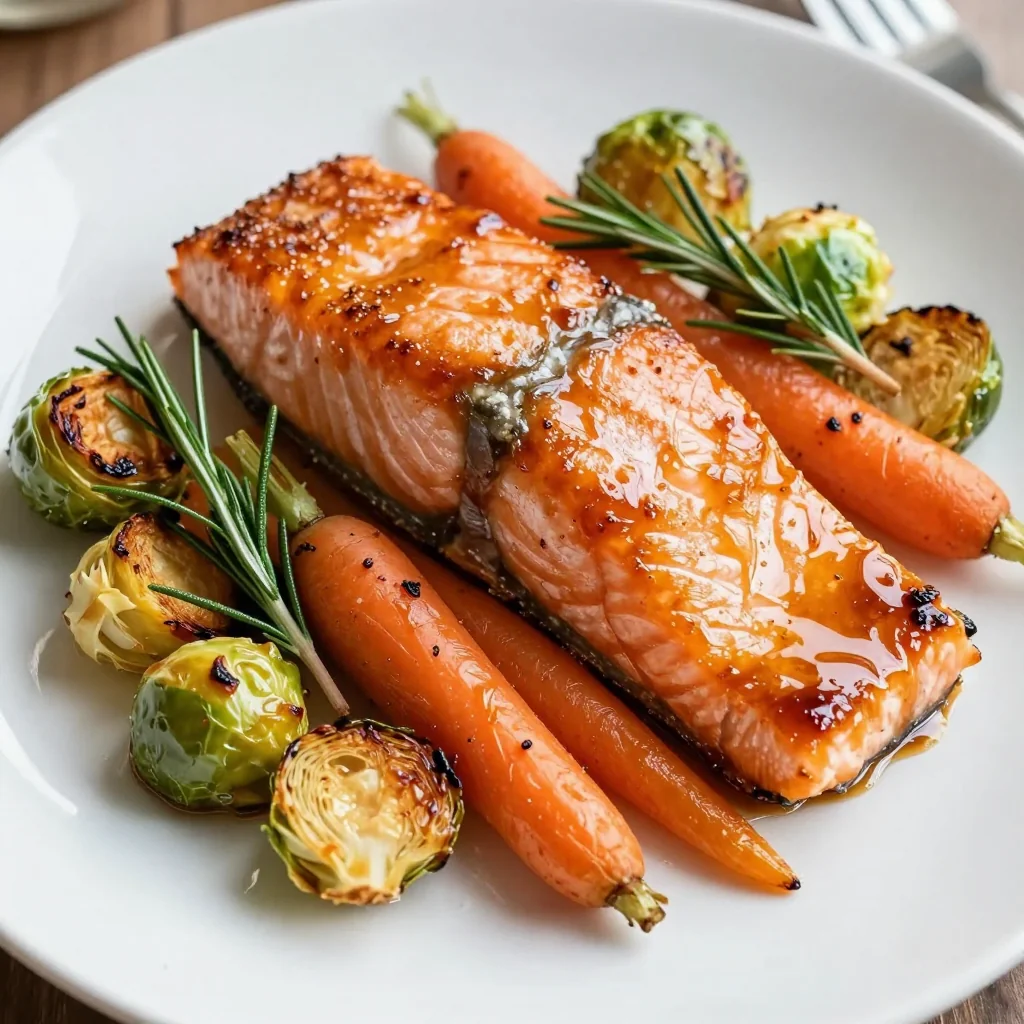
- Maple magic: The syrup’s natural sugars caramelize at high heat, creating a glossy, sticky glaze without refined sugar.
- Winter produce spotlight: Brussels sprouts and potatoes roast in the same time the salmon needs—no extra steps.
- Meal-prep friendly: Chop the veggies and whisk the glaze up to 48 hours ahead.
- Fail-proof salmon: Moderate 400 °F heat plus a glaze that insulates the fillet = tender, never rubbery.
- Clean-up in 30 seconds: Parchment paper catches every sticky drip—just toss and done.
Ingredients You'll Need
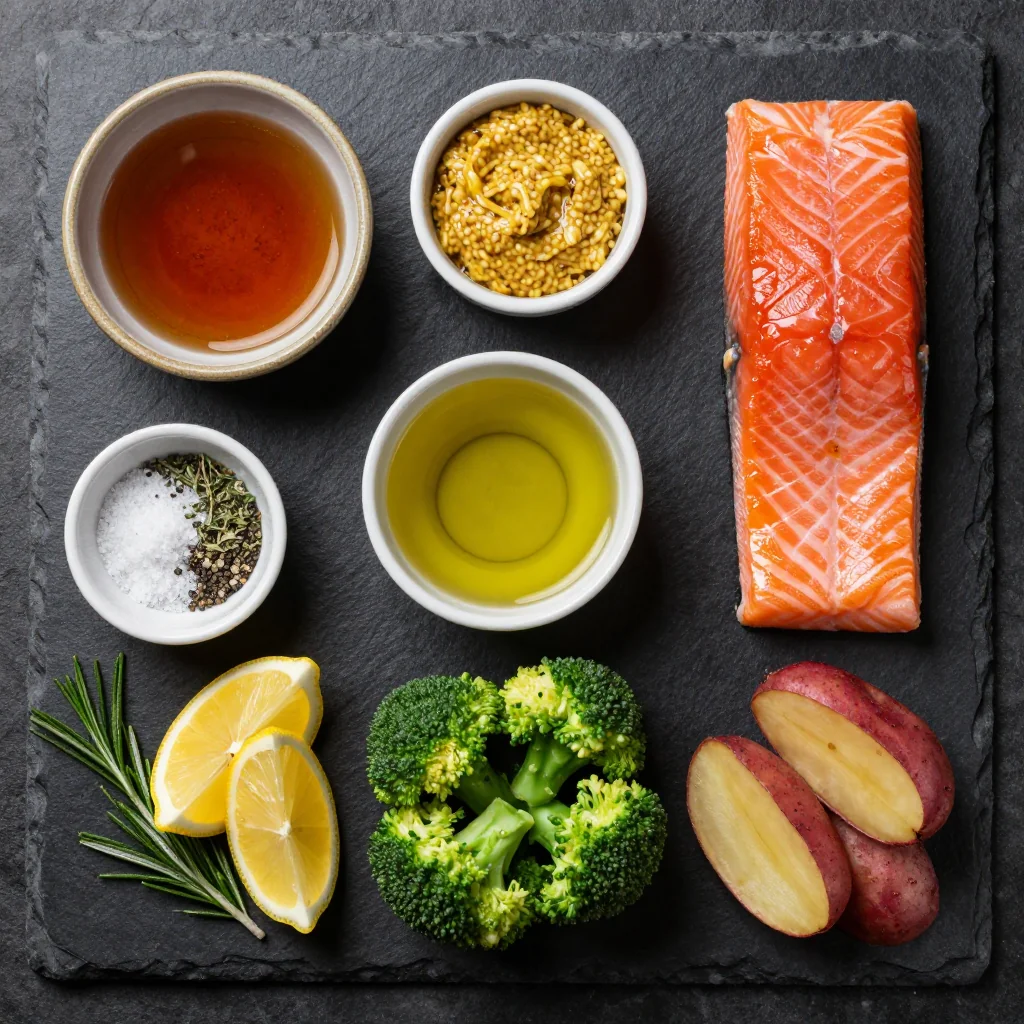
Great salmon starts at the fish counter. Look for fillets that are firm, translucent, and smell like the ocean, not “fishy.” I prefer center-cut portions, 5–6 oz each and about 1-inch thick so they roast evenly. Wild-caught Coho or King is sublime, but responsibly farmed Atlantic works beautifully if that’s what your budget allows.
Pure maple syrup is non-negotiable; the artificial stuff lacks the depth needed for caramelization. Grade A Amber is my go-to for its balanced, not-too-intense maple flavor. If all you have is dark robust, cut the quantity by a tablespoon and add an extra teaspoon of lemon juice to brighten.
Brussels sprouts sweeten as they roast; choose tight, bright green heads and peel away any yellowed outer leaves. Halve the small ones, quarter the giants so every piece contacts the pan and develops those crave-able crispy edges.
Baby potatoes are the speedy choice—no peeling, just halve and go. If only larger potatoes are available, cut them into ¾-inch chunks and give them a five-minute head start in the microwave so they finish in sync with the salmon.
Soy sauce adds umami; low-sodium keeps the glaze from becoming too salty as it reduces. Tamari keeps the dish gluten-free, and coconut aminos work for soy-free homes.
Dijon mustard lends subtle tang and helps the glaze cling. Whole-grain mustard is an excellent swap if you enjoy pops of seeds.
Fresh garlic is worth the 30-second mincing effort; granulated garlic turns bitter above 375 °F. In a pinch, ½ teaspoon of garlic powder blended with the maple works, but add it only in the final glaze coat so it doesn’t scorch.
How to Make Easy Sheet Pan Maple Glazed Salmon for Winter Dinners
Preheat and prep the pan
Position rack in the center of the oven and preheat to 400 °F (204 °C). Line a large, rimmed sheet pan with parchment paper; the overhang will keep maple drips from cementing themselves to the edges. Lightly spritz the parchment with oil so potatoes don’t stick during their head-start roast.
Whisk the maple glaze
In a small jar, combine ¼ cup pure maple syrup, 1½ tablespoons low-sodium soy sauce, 1 tablespoon Dijon mustard, 1 teaspoon finely grated lemon zest, 1 tablespoon lemon juice, 2 minced garlic cloves, and ¼ teaspoon black pepper. Screw on the lid and shake until silky. Reserve 2 tablespoons for finishing; the rest will be used in stages.
Season the vegetables
In a large bowl, toss 1½ pounds halved baby potatoes and 12 oz halved Brussels sprouts with 1 tablespoon olive oil, ½ teaspoon kosher salt, and ¼ teaspoon pepper. Spread them cut-side down on two-thirds of the sheet pan, leaving space for the salmon. This contact with the hot pan equals golden, crispy edges.
First roast for potatoes
Slide the pan into the oven and roast for 12 minutes. This jump-starts the denser vegetables so everything finishes together. Meanwhile, pat salmon fillets very dry with paper towels; excess moisture will steam instead of sear.
Glaze the salmon
Brush the tops and sides of each fillet with a light coat of the maple mixture, then season with a pinch of salt. Push vegetables to the sides to clear a space in the center, lay salmon skin-side down, and brush another layer of glaze on top.
Return to oven
Roast for 9–11 minutes more, depending on thickness. The USDA recommends salmon reach 145 °F, but I pull it at 135 °F—the carry-over heat takes it to silky perfection while preventing the chalky dryness that plagues so many home versions.
Broil for caramelization
Switch oven to broil on high for 2–3 minutes. Watch closely; the glaze bubbles and turns a deep mahogany. This final blast creates the lacquered finish you’d expect from a high-end bistro.
Rest and finish
Remove pan from oven, drizzle reserved 2 tablespoons of fresh glaze over salmon for extra shine, and squeeze lemon over everything. Rest 3 minutes so juices redistribute, then serve right from the sheet pan—just add a stack of warm plates and let everyone help themselves.
Expert Tips
Dry equals crispy
Pat vegetables and salmon very dry; moisture is the enemy of caramelization.
Even sizing
Cut potatoes and sprouts roughly the same size so they roast at the same rate.
Thermometer trust
An instant-read thermometer guarantees perfectly cooked salmon every time—no guessing.
Make it stick
Brush glaze in the final 10 minutes; earlier application can burn before the fish cooks through.
Double the glaze
Whisk a second batch to drizzle over rice, quinoa, or even roasted winter squash later in the week.
Skin on or off
Leave skin on; it insulates the fillet and peels off effortlessly after roasting if you prefer skinless bites.
Variations to Try
-
Spicy Maple
Whisk ½ teaspoon chipotle powder or 1 teaspoon sriracha into the glaze for a sweet-heat twist.
-
Citrus Swap
Sub orange or blood-orange zest/juice for lemon for a warmer, sweeter profile.
-
Root Veg Medley
Replace half the potatoes with cubed parsnip or carrot coins; add them at the same 12-minute mark.
-
Low-Carb Option
Trade potatoes for 1-inch cauliflower florets; they need just the final 11 minutes alongside the salmon.
-
Herb Finish
Scatter fresh dill or thyme leaves over everything right after the broil step for color and fragrance.
-
Different Fish
Thick cod, halibut, or even trout fillets work; adjust cook time down by 2–3 minutes for thinner cuts.
Storage Tips
Refrigerate: Cool leftovers within 2 hours. Store salmon and vegetables in separate airtight containers; the glaze on the fish can make veggies soggy over time. Refrigerated, salmon keeps up to 3 days, roasted vegetables up to 4.
Freeze: While salmon can be frozen, the glaze texture becomes slightly spongy upon thawing. If you must freeze, do so before the final glaze coat. Wrap each fillet tightly, freeze up to 2 months, and brush fresh glaze when reheating. Vegetables freeze best when slightly under-roasted; thaw overnight in the fridge.
Reheat: Warm salmon gently in a 275 °F oven for 8–10 minutes, loosely covered with foil to prevent drying. A quick stint in an air-fryer at 300 °F for 4 minutes also revives the exterior crispness. Microwave works in a pinch—use 50 % power in 30-second bursts—but expect a softer texture.
Make-ahead: Whisk glaze and store up to 1 week refrigerated. Chop vegetables and keep in a zip-top bag with a paper towel to absorb moisture, 3 days ahead. On serving day, simply preheat the pan, toss, and roast.
Frequently Asked Questions
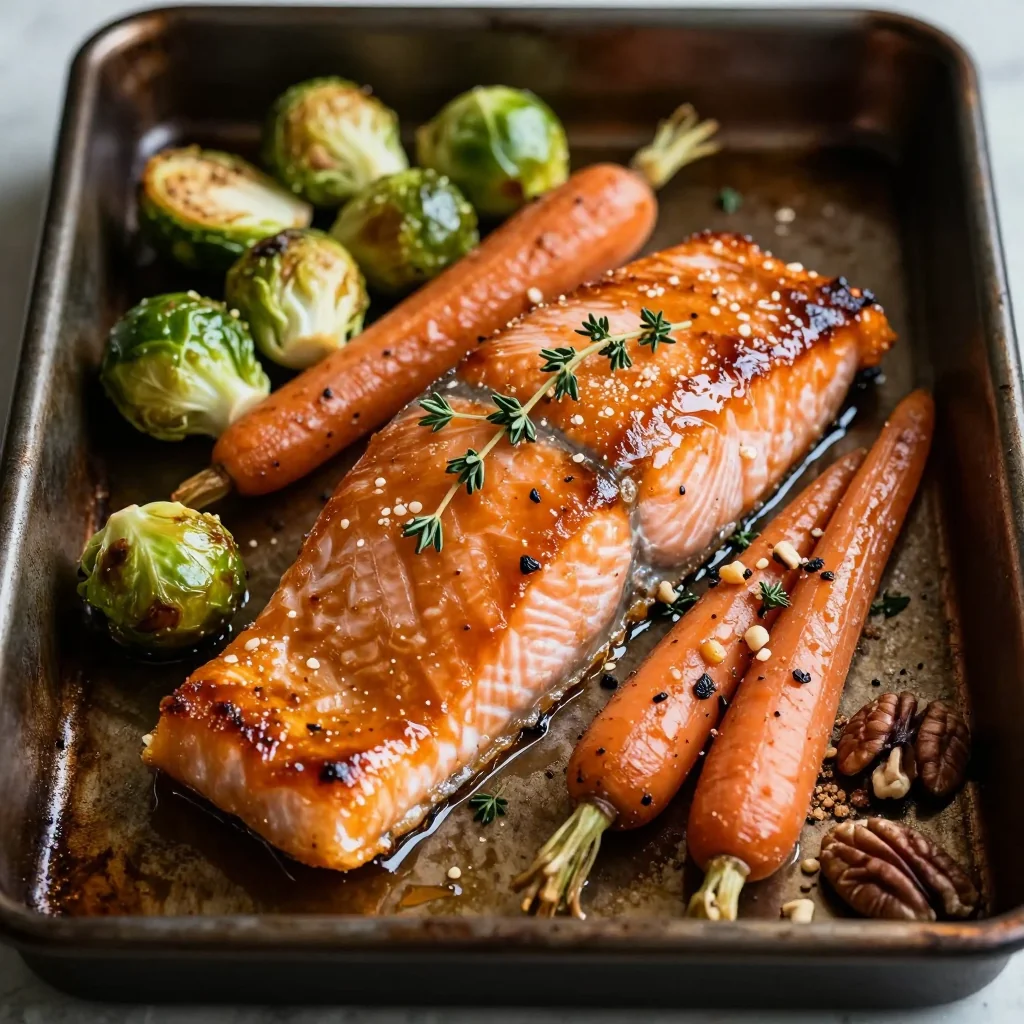
Easy Sheet Pan Maple Glazed Salmon for Winter Dinners
Ingredients
Instructions
- Preheat: Line a rimmed sheet pan with parchment. Heat oven to 400 °F.
- Glaze: Shake maple syrup, soy, Dijon, zest, juice, garlic, and pepper in a jar. Reserve 2 tbsp.
- Vegetables: Toss potatoes and sprouts with olive oil, salt, and pepper. Arrange on two-thirds of the pan.
- First roast: Bake vegetables 12 minutes.
- Add salmon: Brush fillets with glaze, season lightly, clear space on pan, and place salmon skin-side down.
- Finish: Roast 9–11 min more, broil 2–3 min, drizzle reserved glaze, rest 3 min, serve with lemon.
Recipe Notes
Salmon is perfectly cooked when it flakes but still looks translucent in the very center. An instant-read thermometer should read 135 °F before resting.