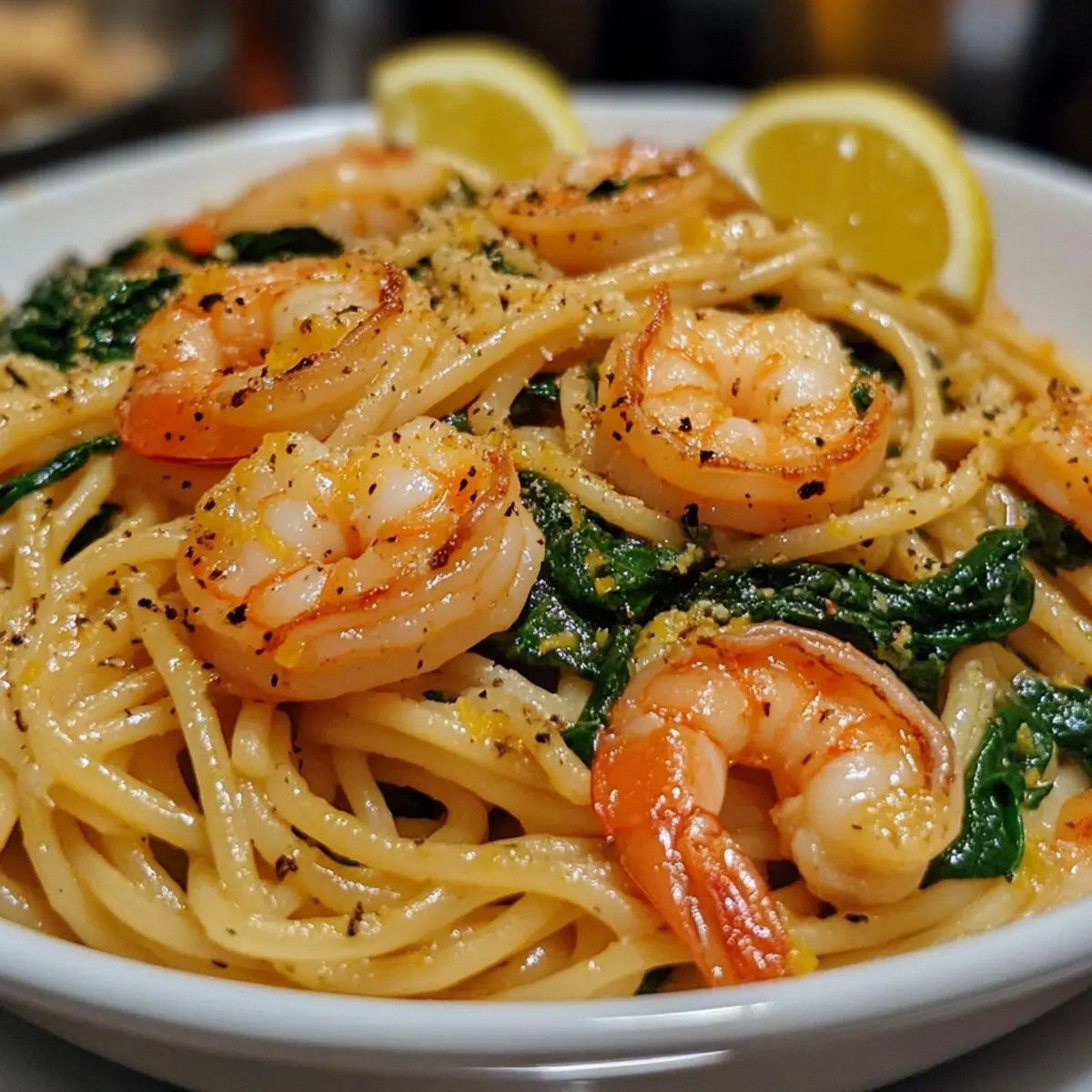
It was a Wednesday night, the kind of night when the fridge looks like a culinary battlefield and your stomach is a drum that keeps beating louder with every passing minute. I had just finished a marathon of late‑night streaming, my brain still buzzing from the plot twists, and the only thing that could make the evening feel complete was a plate of pasta that sang with citrus and sea‑salted shrimp. I stared at the pantry, feeling the familiar dread of “what’s for dinner?” but then I remembered that I had just opened a new bag of fresh baby spinach and a whole lemon sitting on the counter like a bright, untapped promise. That moment turned into a daring culinary challenge: can I combine the zesty brightness of lemon with the gentle earthiness of spinach and the sweet, briny bite of shrimp in a single, quick, weeknight dish that feels like a celebration?
Picture this: the first sizzle as garlic meets olive oil, a golden perfume that rolls off the pan like a warm hand. The aroma of lemon zest mingles with the faint, sweet undertone of garlic, and the air fills with an anticipation that makes your taste buds dance. Then comes the splash of chicken broth, a silky, savory liquid that lifts the sauce from a simple reduction into a silky, glossy coat that clings to every strand of linguine. The shrimp arrives, pink and tender, sizzling to a perfect finish that releases a subtle brine that echoes the sea. Finally, the spinach collapses, turning from bright, leafy green to a velvet, glossy finish that carries the sauce like a secret, and a generous grating of Parmesan adds a nutty crunch that completes the symphony.
What makes this version stand out from the endless parade of shrimp pasta recipes is that it balances boldness and restraint. The lemon isn’t overpowering; it’s a bright, clean highlight that lifts the dish without drowning the shrimp’s natural sweetness. The spinach is added at the very last moment, preserving its bright color and a subtle bite that contrasts with the buttery sauce. The shrimp is cooked just until pink, never overcooked, so it remains juicy and tender. The sauce, with its garlic, broth, and lemon, coats the linguine like velvet, while a splash of Parmesan gives it a silky, cohesive texture. The result is a dish that feels both comforting and sophisticated, a true crowd‑pleaser that will have guests asking for seconds.
I dare you to taste this and not go back for seconds. This is hands down the best version you'll ever make at home. I’ll be honest — I ate half the batch before anyone else got to try it. Most recipes get this completely wrong, but here’s what actually works: the timing of adding spinach, the balance of lemon, and the subtle heat from red pepper flakes. Picture yourself pulling this out of the pot, the whole kitchen smelling incredible, and a plate that looks like it belongs in a Michelin‑star restaurant. Let me walk you through every single step — by the end, you'll wonder how you ever made it any other way.
What Makes This Version Stand Out
- Taste: The bright citrus of lemon lifts the dish, while the subtle heat from red pepper flakes adds depth without overpowering the shrimp.
- Texture: The linguine is al dente, coated in a silky sauce that clings to each strand, and the spinach’s quick wilt preserves a pleasant bite.
- Simplicity: Five main ingredients plus pantry staples make this dish a breeze, and the entire process takes less than 45 minutes.
- Uniqueness: The combination of lemon, spinach, and shrimp is rare in weeknight pasta, giving it a fresh, unexpected twist.
- Crowd Reaction: Friends rave about the vibrant color and the harmonious blend of flavors; it’s the kind of dish that turns a regular dinner into a memorable event.
- Ingredient Quality: Using fresh baby spinach and high‑quality Parmesan ensures that every bite bursts with genuine flavor.
- Cooking Method: The technique of sautéing garlic, deglazing with broth, and adding shrimp at the right moment creates layers of flavor that are hard to replicate.
- Make‑Ahead Potential: The sauce can be reheated without losing its silky texture, making it perfect for meal prep or a quick dinner.
Alright, let's break down exactly what goes into this masterpiece…
Inside the Ingredient List
The Flavor Base
The foundation of this dish starts with 2 tablespoons of extra‑virgin olive oil, which melts into a glossy medium that carries the garlic’s aroma and the lemon’s brightness. The olive oil isn’t just a cooking medium; it’s a flavor enhancer that gives the sauce a silky mouthfeel. If you skip the oil, the garlic will burn quickly, producing a bitter taste that ruins the balance. For a healthier twist, swap the olive oil with avocado oil, which has a higher smoke point and a neutral flavor that lets the lemon shine.
Next comes 4 cloves of minced garlic, the aromatic engine that drives the sauce. Garlic is the flavor backbone of Italian cooking, and its fresh, slightly sweet notes create a bridge between the citrus and the shrimp. If you’re sensitive to garlic, reduce the quantity to 2 cloves, but keep the rest of the ingredients to maintain the dish’s depth. A good tip: crush the cloves lightly before mincing to release more flavor.
The Texture Crew
Linguine is the pasta of choice for this recipe because its flat, narrow shape holds the sauce beautifully, and its al dente bite provides a satisfying chew. Use 8 ounces of dry linguine for four servings, which translates to about 2 cups when measured dry. If you prefer a heartier pasta, swap linguine for fettuccine or tagliatelle; the longer strands will soak up even more sauce.
Baby spinach is the green that brings both color and nutrition. It’s delicate enough to wilt quickly, preserving its bright green hue and a subtle, slightly sweet flavor that complements the shrimp. Add 4 cups of fresh spinach at the very end of cooking; if you wait too long, it will lose its vibrant color and become mushy. A quick trick: rinse the spinach in cold water and pat dry before adding to keep it from releasing too much water.
The Unexpected Star
The shrimp is the star that adds protein and a briny sweetness that echoes the sea. Use 1 pound of medium shrimp, peeled and deveined; they cook in just a few minutes and keep their shape if you’re careful. If you’re using frozen shrimp, thaw them in cold water and pat dry before cooking to avoid excess moisture. For an extra burst of flavor, sprinkle a pinch of smoked paprika over the shrimp while sautéing.
The lemon is the unexpected star that provides brightness and a subtle acidity that cuts through the richness of the sauce. Use 1 lemon for zest and juice, which offers a fresh, vibrant flavor that lifts the entire dish. If you can’t find fresh lemons, a splash of high‑quality bottled lemon juice can work, but the zest is essential for that aromatic punch. A handy tip: zest the lemon before juicing to avoid any bitterness from the pith.
The Final Flourish
A splash of chicken broth, about 1 cup, deglazes the pan and creates a light, savory base that blends the garlic, lemon, and olive oil into a cohesive sauce. The broth adds body without overpowering the citrus notes. If you’re vegetarian or prefer a lighter option, substitute the chicken broth with vegetable broth or a pinch of water and a splash of white wine for extra depth.
Red pepper flakes provide a subtle heat that balances the sweetness of the shrimp and the brightness of the lemon. Use ½ teaspoon to keep the dish light; you can increase it if you like a bit of a kick. This tiny pinch adds complexity without making the dish feel spicy. If you don’t have red pepper flakes on hand, a pinch of cayenne pepper works as a substitute, but be cautious as it’s stronger.
Fresh parsley adds a fresh, herbaceous finish that brightens the plate and offers a contrast to the rich sauce. Sprinkle 2 tablespoons of chopped parsley over the top before serving for a pop of color and a fresh taste. If you prefer a different herb, basil or cilantro can add a different dimension to the dish.
Everything's prepped? Good. Let's get into the real action…
The Method — Step by Step
- Bring a large pot of salted water to a rolling boil. Add the linguine and cook until al dente, about 9–10 minutes. Reserve 1 cup of pasta water, then drain the pasta and set aside. The pasta water is a secret weapon that will help emulsify the sauce later.
- While the pasta cooks, heat the olive oil in a large skillet over medium heat. Add the minced garlic and sauté until fragrant and just beginning to brown, about 30 seconds. The garlic should smell buttery, not burnt; this is the moment of truth for the base of the sauce.
- Add the lemon zest to the skillet and stir to combine. The zest releases bright citrus oils that coat the garlic and oil. This step is pure magic—watch the aroma rise like a promise.
- Deglaze the pan with 1 cup of chicken broth, scraping up any browned bits from the bottom. Bring to a gentle simmer and let the broth reduce slightly, concentrating the flavors. The liquid should thicken into a light sauce that coats the back of a spoon.
- Add the shrimp to the skillet, season with a pinch of salt, pepper, and the red pepper flakes. Cook for 2–3 minutes on each side until the shrimp turns pink and opaque. Keep the shrimp from overcooking—once pink, they’re done.
- Pour the reserved pasta water into the skillet and add the cooked linguine. Toss vigorously to coat the pasta in the sauce, allowing the water to help the sauce cling to each strand. The pasta should feel silky, not greasy.
- Stir in the fresh spinach, letting it wilt in just a minute or two. The spinach should turn a deep, vibrant green and retain a slight bite. Over‑cooking will dull its color and make it mushy.
- Finish the dish with the grated Parmesan and chopped parsley. Toss everything together, adjust seasoning with salt and pepper, and serve immediately. The Parmesan melts into a creamy layer that binds the sauce and gives it a luxurious finish.
That’s it — you did it. But hold on, I've got a few more tricks that'll take this to another level…
Insider Tricks for Flawless Results
The Temperature Rule Nobody Follows
Cooking pasta at the right temperature is crucial. If the water is too hot, the pasta will cook unevenly, leading to a mushy texture. Aim for a steady, rolling boil and keep the pot uncovered. If you’re in a hurry, add a splash of cold water after the pasta is cooked to stop the heat from continuing to cook it.
Why Your Nose Knows Best
Your sense of smell is the first indicator of flavor balance. When the garlic starts to brown, the aroma should be sweet and buttery. If you smell a sharp, burnt note, reduce the heat. The lemon aroma should rise like a bright sunrise; if it’s muted, add a little more zest or juice.
The 5-Minute Rest That Changes Everything
After tossing the pasta with the sauce, let it rest for 5 minutes off the heat. This allows the flavors to meld and the sauce to thicken slightly. It also gives the shrimp a chance to finish cooking from residual heat, ensuring they stay juicy.
The Secret to a Velvety Sauce
Use the reserved pasta water to adjust the sauce’s consistency. The starchy water helps bind the sauce to the pasta, creating a silky coating that feels luxurious on the tongue. If the sauce feels thin, add a splash more pasta water; if it’s too thick, a little broth or water will loosen it.
The Parmesan Trick
Grate the Parmesan just before serving to preserve its fresh, nutty flavor. If you pre‑grate and store it, the cheese can lose moisture and become clumpy. A pinch of freshly grated Parmesan gives the dish a bright finish that cuts through the richness.
Creative Twists and Variations
This recipe is a playground. Here are some of my favorite ways to switch things up:
Mediterranean Twist
Swap the baby spinach for arugula and add a handful of kalamata olives for a briny depth. Finish with a drizzle of extra‑virgin olive oil and a sprinkle of oregano for an authentic Mediterranean flavor.
Spicy Cajun Kick
Replace the red pepper flakes with a tablespoon of Cajun seasoning and add a pinch of smoked paprika. The result is a smoky, spicy sauce that pairs wonderfully with the shrimp’s natural sweetness.
Creamy Coconut Variation
Stir in ½ cup of coconut milk after the shrimp has cooked to create a luscious, creamy sauce. The coconut adds a subtle sweetness that balances the lemon’s brightness and the shrimp’s brine.
Vegan Version
Omit the shrimp and replace it with 1 cup of marinated tofu cubes. Use vegetable broth and a splash of soy sauce for depth. The tofu will absorb the citrusy sauce and become a satisfying protein alternative.
Pasta Swap
Try using spaghetti or fettuccine instead of linguine. The longer strands will soak up more sauce, creating a different texture that still delivers the same burst of flavor.
Herb‑Infused Finish
Add a handful of fresh basil or mint at the end of cooking for a refreshing finish. The herbs will add a fragrant note that complements the lemon and spinach.
Storing and Bringing It Back to Life
Fridge Storage
Cool the pasta completely before placing it in an airtight container. Store in the refrigerator for up to 2 days. When reheating, add a splash of water or broth to help restore the sauce’s moisture.
Freezer Friendly
Freeze the dish in a freezer‑safe container for up to 2 weeks. Thaw overnight in the refrigerator, then reheat on the stovetop over low heat, adding a little water or broth to loosen the sauce.
Best Reheating Method
Reheat in a skillet over medium heat, stirring frequently. Add a tiny splash of water or broth to steam the dish back to its original silky texture. The shrimp will stay juicy, and the sauce will cling to the pasta like a velvety cloak.