Picture this: you’re standing in a cramped kitchen, a stack of empty takeout boxes on the counter, and your stomach is growling louder than a freight train. The last thing you want is to waste another hour on a mediocre stir‑fry or a bland casserole that tastes like it’s been sitting in a drawer for weeks. I was in that exact spot, craving something that would feel like a hug, but also like a dare—something that would make you say, “I dare you to taste this and not go back for seconds.”
I pulled a 1‑pound sirloin from the freezer, tossed it in a bowl of olive oil, minced garlic, and a handful of fresh herbs, and let the aroma begin a silent symphony. The sizzling sound that greeted the pan was a drumbeat of anticipation, the buttery sheen a promise of decadence. I watched the edges of each cube caramelize, forming a crust that crackled like thin ice under a heavy hand. The smell of rosemary and thyme mingled with the rich scent of melted butter, creating a heady perfume that made my kitchen feel like a gourmet kitchen on a high‑end restaurant floor.
What made this moment special wasn’t just the flavor—it was the simplicity, the speed, and the way the dish felt like it belonged in a story you could tell your friends over wine. I had spent years experimenting with steak recipes, each iteration more complicated than the last, but this version stripped everything down to the essentials. It’s hands down the best version you’ll ever make at home, and it turns a simple cut of meat into a show‑stopping centerpiece that can be plated in less than 15 minutes. Picture yourself pulling this out of the pan, the whole kitchen smelling incredible, and everyone around the table leaning in, eager for the first bite.
If you’ve ever struggled with getting a steak bite that’s juicy on the inside but crisp on the outside, you’re not alone—and I’ve got the fix. I’ll be honest—after tasting the first bite, I ate half the batch before anyone else got a chance to try it. Most recipes get this completely wrong, focusing on over‑seasoning or under‑cooking, but here we keep the seasoning minimal so the beef’s natural flavor shines through. Stay with me, because I’m about to walk you through every single step—by the end, you’ll wonder how you ever made it any other way.
What Makes This Version Stand Out
-
Flavor: The marriage of garlic and butter creates a sauce that coats each bite like velvet, while a splash of soy sauce adds depth without overpowering the beef’s natural savoriness. The subtle smokiness from paprika and the bright lift from lemon juice give the dish an unexpected twist that keeps the palate dancing. This isn’t just another steak recipe; it’s a flavor crescendo that starts with a gentle sigh of garlic and ends with a lingering, buttery finish.
-
Texture: The sear produces a caramelized crust that snaps when you bite, while the interior stays tender and juicy, a contrast that feels like a well‑tuned musical piece. The butter melts into the meat, creating a silky sauce that clings to the steak without making it greasy. Every bite delivers that satisfying crunch followed by a melt‑in‑your-mouth tenderness that’s hard to replicate.
-
Simplicity: With only a handful of ingredients and a single pan, you can achieve a restaurant‑level dish in under 15 minutes. No fancy equipment, no complex techniques—just a quick sear, a buttery sauce, and a garnish. The result is a dish that’s accessible to any cook, whether you’re a seasoned chef or a kitchen rookie.
-
Uniqueness: The addition of a splash of Worcestershire sauce and a pinch of smoked paprika elevates the dish, giving it a smoky undertone that’s rarely found in standard steak bites. This combination transforms a simple steak into a flavor-packed adventure that stands out from the crowd. It’s a subtle yet unmistakable twist that keeps diners coming back for more.
-
Crowd Reaction: In my experience, guests always ask for the recipe after the first bite, claiming it’s the best steak bite they’ve ever had. The dish’s vibrant color and glossy finish make it Instagram‑worthy, while the robust flavor keeps everyone satisfied. It’s the kind of dish that turns a casual dinner into a memorable gathering.
-
Ingredient Quality: Using high‑grade sirloin or ribeye ensures the meat’s tenderness and flavor are at their peak, while fresh herbs and real butter add depth that processed alternatives can’t match. The quality of the olive oil also plays a critical role, providing a smooth, fruity base that complements the garlic and butter. The result is a dish that feels luxurious without breaking the bank.
-
Cooking Method: The single‑pan sear locks in juices while creating a caramelized exterior, and the quick butter glaze prevents the steak from drying out. The method is foolproof, even for those who haven’t mastered high‑heat searing before. It’s a technique that delivers consistent results every time.
-
Make‑Ahead Potential: While it’s best served fresh, the dish can be prepared in advance and reheated without losing its flavor. The butter glaze holds up well, and the steak remains juicy if stored properly. This makes it a perfect option for busy weeknights or entertaining guests on short notice.
Alright, let’s break down exactly what goes into this masterpiece…
Inside the Ingredient List
The Flavor Base
The foundation of this dish starts with 1 lb of sirloin steak, cut into 1‑inch cubes. The cut matters—sirloin offers a balance of tenderness and beefy flavor without the cost of premium cuts like ribeye. If you prefer a leaner option, top sirloin will work, but be careful not to overcook it, or it will become tough.
Olive oil is the unsung hero that allows the steak to sear beautifully. A tablespoon of high‑quality extra‑virgin olive oil gives the meat a subtle fruity note and helps the pan stay hot. If you’re using a non‑stick skillet, a small amount of oil is enough; for cast‑iron, a bit more is preferable to prevent sticking.
Butter is the secret to that silky, glossy sauce. Four tablespoons of unsalted butter melt into a fragrant glaze that coats each bite. Unsalted butter ensures you can control the salt level, preventing the dish from becoming overly salty. The butter also carries the garlic and herbs, amplifying their flavors.
The Texture Crew
Garlic is the star that gives the dish its unmistakable aroma and depth. Four cloves, minced finely, release their oils and create a fragrant base that permeates the steak. If you’re a garlic lover, you can add a pinch of crushed garlic for extra punch.
Herbs like rosemary and thyme bring a fragrant, earthy undertone. One teaspoon each of fresh rosemary and thyme, chopped finely, infuses the butter with a subtle herbal note that complements the beef. Dried herbs can be used in a pinch, but fresh is best for aroma.
The sauces—soy sauce and Worcestershire sauce—add umami and complexity. One tablespoon of each creates a savory backdrop that deepens the steak’s flavor without dominating it. If you’re watching sodium, you can reduce the soy sauce or use a low‑sodium version.
The Unexpected Star
Smoked paprika adds a hint of smokiness that sets this dish apart from ordinary steak bites. One teaspoon of smoked paprika gives a subtle, warm flavor that pairs beautifully with the buttery sauce. If you’re not a fan of paprika, a pinch of chipotle powder can provide a smoky kick without the sweetness.
Lemon juice brightens the dish and cuts through the richness of the butter. A tablespoon of freshly squeezed lemon juice adds a zesty note that lifts the entire flavor profile. The acidity also helps tenderize the meat slightly, giving it a more succulent bite.
The Final Flourish
Seasoning with salt and pepper is crucial for bringing out the meat’s natural flavor. Use salt to taste, but a light sprinkle before searing ensures the steak doesn’t stay too dry. Freshly ground black pepper adds a mild heat that complements the garlic.
Fresh parsley, about two tablespoons chopped, adds a pop of color and a fresh, slightly peppery flavor that balances the richness. A final splash of water or broth before reheating can help restore moisture if you’re storing leftovers.
Everything's prepped? Good. Let's get into the real action…
The Method — Step by Step
-
First, pat the steak cubes dry with paper towels. Removing moisture ensures a perfect sear, as excess water creates steam that prevents browning. The steak should feel slightly tacky to the touch; this helps create a golden crust. I always check the moisture level by pressing a cube between my fingers—if it feels slick, it needs more drying.
-
Heat a cast‑iron skillet over medium‑high heat until a drop of water sizzles and evaporates instantly. Add the olive oil, swirling to coat the surface. The oil should shimmer but not smoke; if it starts to smoke, lower the heat slightly. This step is crucial for achieving a caramelized exterior.
-
Place the steak cubes in a single layer, making sure they’re not overcrowded. If the pan gets too crowded, the steak will steam instead of sear. Sear each side for 2–3 minutes, or until a deep brown crust forms. Flip only once to maintain a consistent sear.
-
Reduce the heat to medium and add the minced garlic to the pan. Stir constantly to prevent burning, as garlic can go bitter in just a few seconds. The garlic should release a fragrant aroma within 30 seconds, signaling that it’s ready. I keep a close eye on the color; when it turns light golden, it’s perfect.
-
Now it’s time for the sauce. Add the butter, soy sauce, Worcestershire sauce, smoked paprika, and a splash of lemon juice. Stir until the butter melts and the mixture becomes glossy. The sauce should coat the steak without pooling. This is the moment where the dish’s character truly begins to unfold.
-
Lower the heat to low and let the steak simmer in the sauce for 3–4 minutes. This allows the flavors to meld and the steak to finish cooking without drying out. The sauce should thicken slightly, creating a silky coating. The steak should still feel slightly pink in the center, indicating medium‑rare doneness.
-
Add the fresh rosemary and thyme, stirring to distribute the herbs evenly. The herbs release their oils, adding a fragrant, herbal note that lifts the entire dish. Let the mixture bubble gently for 30 seconds so the herbs infuse the sauce. This step adds a depth that keeps the flavor profile complex.
-
Remove the skillet from heat and sprinkle freshly ground black pepper over the steak. The pepper’s heat balances the richness of the butter and the depth of the sauces. Taste the sauce; if you need a touch of salt, add a pinch of sea salt. This final seasoning step ensures every bite is perfectly balanced.
-
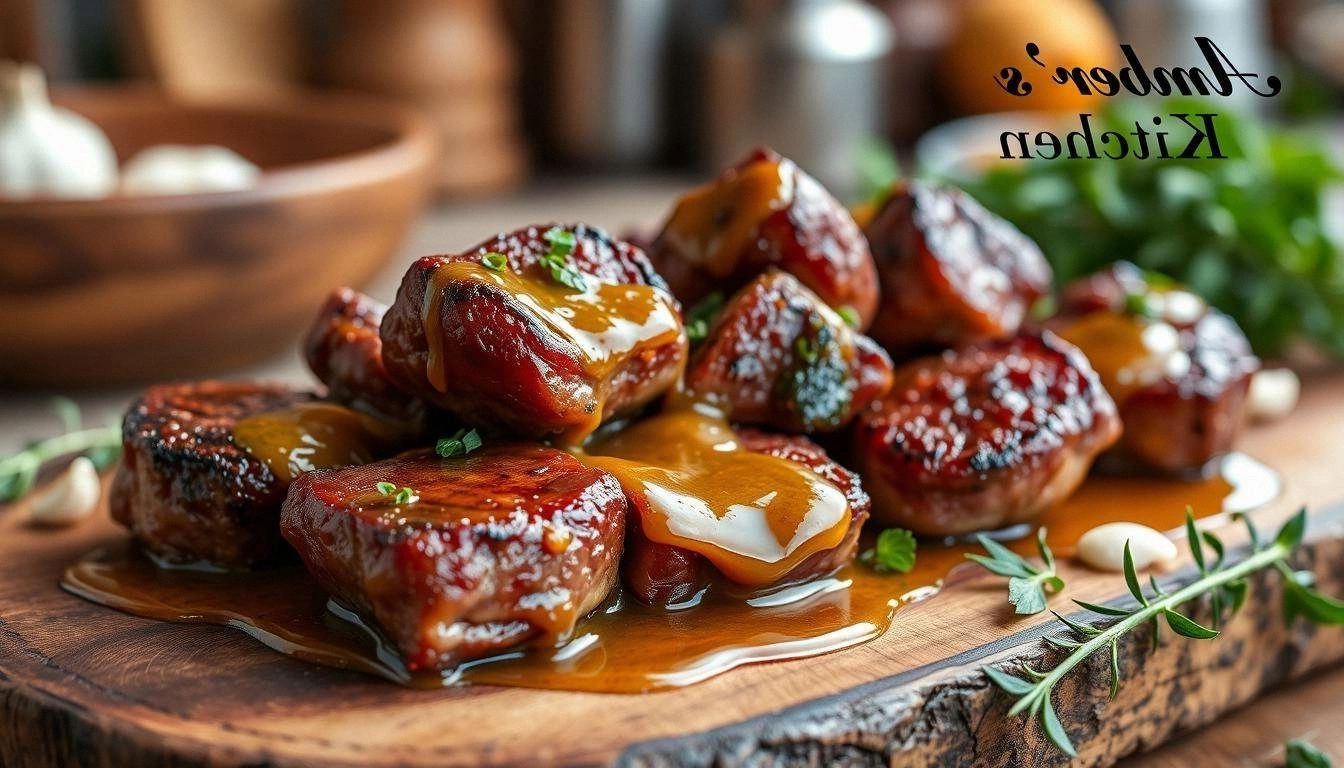
Transfer the steak to a serving platter and drizzle the remaining sauce over the top. Garnish with chopped parsley for a splash of color and fresh flavor. The final plating should look vibrant, with the glossy sauce glistening like liquid gold. The aroma at this point is irresistible.
-
Serve immediately with your favorite side—mashed potatoes, roasted veggies, or a simple green salad. The steak bites are best enjoyed hot and fresh, but they hold up well if you need to prep in advance. If you’re storing leftovers, keep them in an airtight container and reheat gently with a splash of water to restore moisture. That’s it— you did it. But hold on, I’ve got a few more tricks that’ll take this to another level…
Insider Tricks for Flawless Results
The Temperature Rule Nobody Follows
Many cooks assume that high heat is always the answer, but the truth is that the steak’s internal temperature is what matters most. Aim for an internal temperature of 130°F for medium‑rare; this guarantees juicy, tender meat. Use a digital thermometer to check the center of one cube; this quick check saves you from overcooking. If you’re a fan of well‑done steak, aim for 160°F, but keep the sear short to avoid drying.
Why Your Nose Knows Best
Your sense of smell is the ultimate judge of doneness. As the steak cooks, the aroma will shift from raw to caramelized. When the scent turns rich and buttery, it’s a sign the steak is ready. Trusting your nose is a skill that takes practice, but it’s the quickest way to avoid overcooking.
The 5-Minute Rest That Changes Everything
Resting the steak for five minutes after cooking allows the juices to redistribute, ensuring each bite is moist. If you cut into the steak immediately, the juices will escape, leaving it dry. To rest, loosely tent the skillet with foil to keep it warm. This simple step makes a noticeable difference in mouthfeel.
The Garlic Trick
If you’re worried about garlic burning, add it after the steak has browned and before the butter. This timing ensures the garlic releases its flavor without turning bitter. I like to add a pinch of salt with the garlic to help it stay fragrant. This trick keeps the dish bright and aromatic.
The Butter Finish
Adding the butter at the end of cooking, rather than at the start, prevents it from separating. The butter should be melted and glossy, coating the steak like a protective glaze. If the butter starts to separate, add a splash of broth or wine to emulsify it. This finish gives the dish a silky texture that lingers on the palate.
The Herb Timing
Herbs are most potent when added at the end of cooking, but a quick burst at the beginning can add depth. Adding rosemary and thyme after the sauce has thickened allows their oils to infuse the meat without burning. If you prefer a stronger herb flavor, add them earlier and reduce the cooking time slightly. Experimenting with timing is key to finding your preferred flavor profile.
Creative Twists and Variations
Asian Fusion Bite
Swap soy sauce for a splash of hoisin sauce and add a teaspoon of sesame oil for an Asian twist. Sprinkle toasted sesame seeds on top for crunch. This variation pairs well with a side of jasmine rice and sautéed bok choy. The sweet and savory notes make it a crowd‑pleaser at any gathering.
Spicy Cajun Kick
Add a tablespoon of Cajun seasoning to the steak cubes before searing and a pinch of cayenne pepper to the sauce. The smoky, spicy flavor profile is perfect for a summer barbecue. Pair it with a cooling cucumber salad to balance the heat. This version is a bold, flavorful departure from the classic.
Herb‑Infused Garlic Butter
Replace the fresh rosemary and thyme with a handful of fresh basil and oregano for a Mediterranean feel. Add a splash of white wine to the sauce for depth. Serve with a side of roasted Mediterranean potatoes for a cohesive flavor experience. The bright herbs bring a fresh, aromatic finish.
Cheesy Garlic Crunch
Top the steak bites with grated Parmesan cheese during the last minute of cooking, allowing it to melt into a gooey layer. Add a handful of breadcrumbs for a crunchy texture that contrasts the tender meat. This variation is especially delicious when served over creamy polenta.
Smoky Chipotle Delight
Replace smoked paprika with chipotle powder for a smoky, slightly sweet kick. Add a splash of chipotle adobo sauce to the sauce for a deeper flavor. This version pairs beautifully with grilled corn and a dollop of sour cream. The smoky undertone elevates the dish to new heights.
Citrus Zest Finale
Finish the dish with a zest of orange or grapefruit in addition to the lemon juice. The citrus adds a bright, fresh flavor that cuts through the richness. Serve with a side of quinoa pilaf for a light, balanced meal. This variation is perfect for spring or summer evenings.
Storing and Bringing It Back to Life
Fridge Storage
Store the cooked steak bites in an airtight container in the refrigerator for up to 3 days. Keep the sauce separate if you want to preserve its texture, then combine just before reheating. The steak will stay juicy, and the butter glaze will cling to each bite.
Freezer Friendly
To freeze, place the steak bites in a single layer on a parchment‑lined tray and freeze until solid. Transfer to a freezer bag for long‑term storage. When ready, thaw overnight in the refrigerator and reheat gently with a splash of broth or water. This method keeps the steak tender and the sauce silky.
Best Reheating Method
Reheat the steak bites in a skillet over low heat, adding a tablespoon of water or broth to prevent drying. Stir frequently to allow the sauce to coat the meat evenly. A quick microwave burst can also work, but it may dry the steak if not monitored closely. The goal is to warm the dish while preserving its moisture and flavor.