I was standing in my kitchen, staring at a bowl of mangoes that looked more like a tropical sunset than a snack ingredient. The previous night’s dessert experiment had collapsed into a sticky, unrecognizable mess, and my friends had laughed, saying, “You can’t make sticky rice into cookies!” I decided to prove them wrong, and I swear I was half‑screaming when I finally pulled the first batch out of the oven. That moment, with the aroma of caramelized sugar and coconut filling my kitchen, was pure triumph, and it made me realize that this recipe could be the secret weapon for every dessert table.
Picture a cookie that feels like a chewy, buttery bite of mango, yet has the comforting heft of sticky rice. The texture is a paradox: the dough clings together like a velvety glove, but when you bite, the sweet rice inside gives a subtle, grainy crunch that’s oddly satisfying. The flavor profile is a tropical storm, with the bright zing of ripe mango balanced by the mellow warmth of toasted coconut and a whisper of vanilla. Every bite feels like a vacation in a jar, and that’s why I’m so excited to share the exact steps that make this version stand out.
If you’ve ever tried a cookie that tasted like a dessert and then turned out bland, you’re not alone. Most cookie recipes either underplay the mango or overcook the rice, resulting in a flat, dry texture. I discovered that the secret lies in the timing of the rice cooking and the exact ratio of sweeteners. I dare you to taste this and not go back for seconds—once you do, you’ll wonder why you ever settled for ordinary cookies.
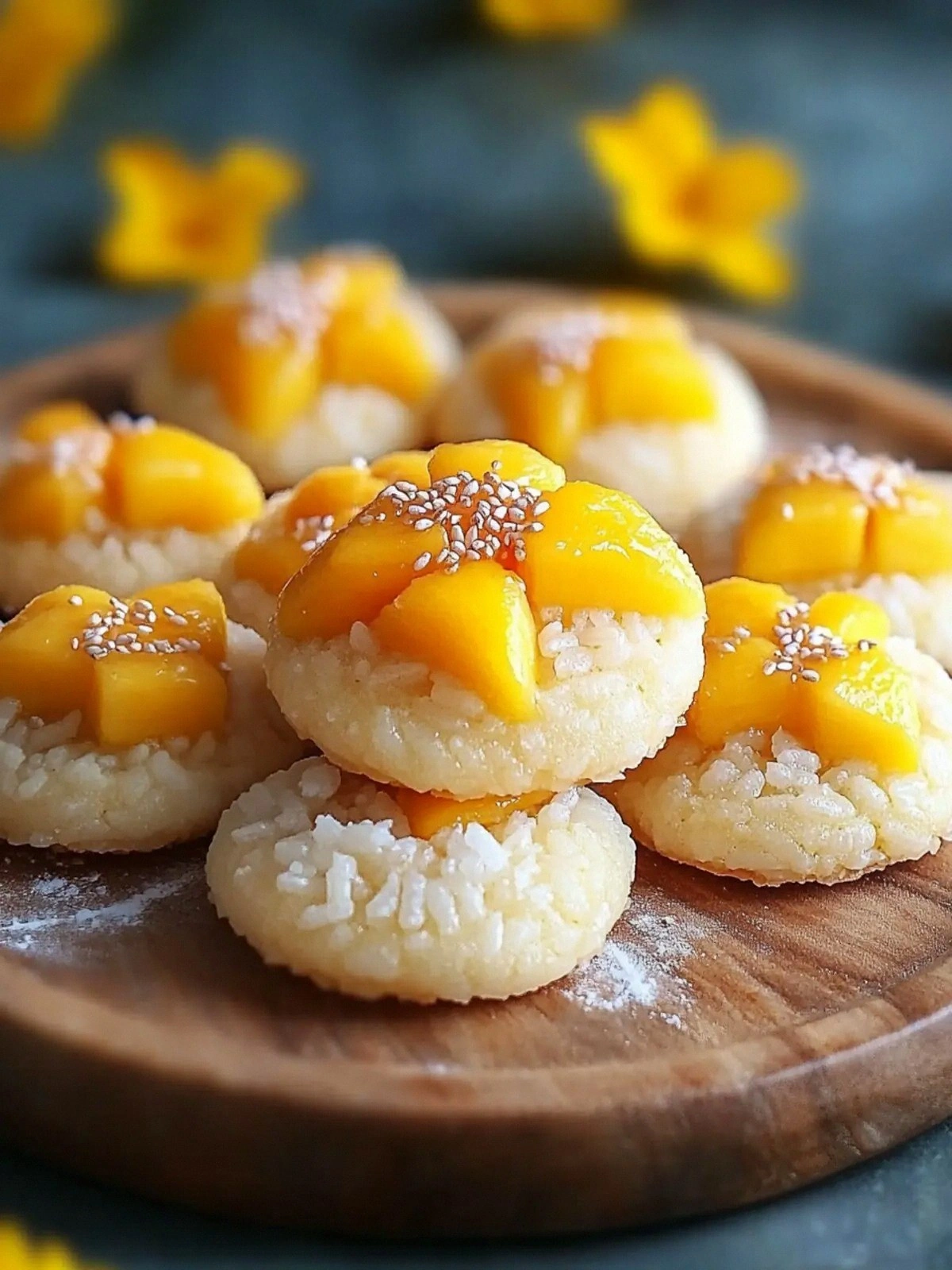
What makes this version hands down the best you’ll ever make at home is that it captures the authentic essence of mango sticky rice—a classic Thai dessert—while still being a cookie that can be enjoyed any time of day. The technique of caramelizing the sugar until it’s a deep amber before folding in the mango gives the dough a golden crust that crackles when you bite. The inclusion of black sesame seeds adds a subtle nutty note and a visual contrast that elevates the presentation. And the final touch? A flaky sea salt sprinkle that balances the sweetness with a savory bite.
Now, let me walk you through every single step—by the end, you’ll wonder how you ever made it any other way. I’ve written this recipe with the same enthusiasm I had when I first cracked the code, so grab your apron and let’s get started.
What Makes This Version Stand Out
- Taste: The mango is pure, not mashed or blended, preserving its bright, tropical flavor that permeates every bite.
- Texture: The sticky rice is cooked to a perfect al dente, creating a chewy core that contrasts beautifully with the crisp cookie edges.
- Visual Appeal: The golden crust and the pop of black sesame seeds make each cookie look like a piece of art.
- Simplicity: Only 16 ingredients, all pantry staples, and a straightforward process that even novice bakers can master.
- Make‑ahead Potential: The cookies can be baked ahead, stored in an airtight container, and enjoyed fresh for up to a week.
- Ingredient Quality: Using fresh, ripe mangoes and high‑quality coconut milk turns an ordinary cookie into a luxury treat.
- Unique Twist: The addition of flaky sea salt provides a surprising savory finish that keeps the palate engaged.
- Crowd Reaction: Friends who have tasted these cookies report that they’re “the first time I’ve ever had a cookie that makes me feel like I’m on vacation.”
Inside the Ingredient List
The Flavor Base
Mangoes: Fresh, ripe mangoes are the star of this recipe. They bring that unmistakable sweetness and a hint of tropical acidity that balances the richness of the coconut milk. If you’re out of mangoes, a blend of pineapple and papaya can mimic the flavor profile, but the texture will differ slightly. Choosing mangoes with a bright, golden hue ensures maximum juice and flavor extraction.
White Sugar: The white sugar is caramelized to create a golden crust that adds depth and a slight bitterness, counterbalancing the sweetness. Skipping the caramelization step will leave the cookies bland and flat. If you prefer a lower glycemic index, try substituting part of the white sugar with coconut sugar, but keep the caramelization temperature in mind.
Sweet Rice (Glutinous Rice): This sticky rice is the backbone of the cookie, giving it that chewy center reminiscent of traditional mango sticky rice. It must be rinsed until the water runs clear and then boiled until just tender. Overcooking will turn it mushy, while undercooking will leave it hard and grainy.
The Texture Crew
Coconut Milk: Rich coconut milk provides a velvety mouthfeel and a subtle coconut aroma that complements the mango. Use full‑fat coconut milk for the best results; light coconut milk will produce a thinner batter. If you’re dairy‑free, coconut milk is already a plant‑based choice, so this recipe is naturally vegan-friendly.
Sweetened Condensed Milk: This thick, sweet liquid locks in moisture and adds a luscious, caramel‑like flavor. It also helps the cookies hold together during baking. If you’re looking for a healthier alternative, replace it with a mixture of coconut milk and honey in a 1:1 ratio.
Unsalted Butter: Butter contributes richness, flavor, and a tender crumb. The unsalted version allows you to control the salt level precisely. If you’re avoiding dairy, use a plant‑based butter with a similar fat content.
The Unexpected Star
Light Brown Sugar: Light brown sugar adds a subtle molasses flavor and moisture, enhancing the cookie’s chewiness. It also reacts with the baking soda to create lift and lightness. If you only have dark brown sugar, use the same amount, but be prepared for a slightly stronger molasses taste.
Egg Yolk: The yolk adds richness, binds the ingredients, and gives the cookies a golden hue. It also helps the cookies spread slightly, creating a delightful thin, crisp edge. If you’re vegan, you can substitute a flax egg (1 tablespoon ground flaxseed mixed with 3 tablespoons water) for the yolk.
The Final Flourish
Vanilla Extract: Vanilla amplifies the mango’s sweetness and rounds out the flavor profile. A touch of vanilla is essential; too much can overpower the mango. If you’re looking for a twist, try using almond extract for a nutty undertone.
All‑Purpose Flour: The flour provides structure and helps the cookies hold their shape. Using a blend of whole wheat and all‑purpose flour can add a nutty flavor and extra fiber, but it will alter the texture slightly.
Baking Soda: Baking soda reacts with the acidic mango and coconut milk to create lift and a light, airy interior. Without it, the cookies would be dense and flat. If you’re sensitive to sodium, reduce the amount by half, but expect a denser cookie.
Salt: Salt enhances all the flavors and balances the sweetness. The recipe calls for 1/2 teaspoon, which is enough to brighten the mango without being noticeable. If you’re using salted butter, you can reduce the salt slightly.
Black Sesame Seeds: These seeds add a nutty flavor and a pop of color. They also provide a subtle crunch that contrasts with the chewy rice. If you’re allergic, you can omit them; the cookies will still be delicious.
Flaky Sea Salt: The final sprinkle of flaky sea salt adds a savory contrast that makes each bite feel complete. It’s the finishing touch that turns a sweet cookie into a complex flavor experience.
Everything’s prepped? Good. Let’s get into the real action and make a batch that will have everyone begging for seconds.
The Method — Step by Step
- First, preheat your oven to 350°F (175°C) and line two baking sheets with parchment paper. While the oven heats, bring a pot of water to a rolling boil and add the rinsed sticky rice. Cook the rice for 12 minutes, then drain and rinse with cold water to stop the cooking process. Let the rice sit for 5 minutes so it’s moist but not mushy. This step is crucial because the rice’s moisture level will affect the cookie’s chewiness.
- In a medium saucepan, combine 1 cup of white sugar with 1 cup of coconut milk. Cook over medium heat until the sugar dissolves and the mixture turns a deep amber color, about 8-10 minutes. Stir constantly to prevent scorching. Once caramelized, remove from heat and let it cool slightly; the caramel will thicken as it cools.
- While the caramel cools, dice the mangoes into small cubes, about 1/4 inch each. Reserve a small portion of mango cubes for garnish later. The diced mangoes will release juice during baking, creating pockets of sweetness inside the cookie.
- In a large mixing bowl, combine the caramelized coconut milk mixture, 1 cup of sweetened condensed milk, 1/2 cup of unsalted butter, and 1/2 cup of light brown sugar. Whisk until the butter is fully incorporated and the mixture is smooth. The butter will help create a tender crumb and a golden finish.
- Add the cooked sticky rice to the wet mixture and stir until the rice is evenly coated. This is the moment of truth—if the rice isn’t fully coated, the cookies will be dry. Let the mixture cool to room temperature; this prevents the egg yolk from scrambling later.
- Once the mixture is cool, beat in the egg yolk and 1 teaspoon of vanilla extract. The yolk will bind the dough and give the cookies a rich, glossy appearance. Mix until the batter is smooth and slightly thick.
- In a separate bowl, whisk together 2 cups of all‑purpose flour, 1 teaspoon of baking soda, 1/2 teaspoon of salt, 1 tablespoon of black sesame seeds, and 1/2 teaspoon of flaky sea salt. Gradually fold the dry ingredients into the wet batter, mixing until just combined. Overmixing will make the cookies tough.
- Kitchen Hack: Use a silicone spatula to fold in the dry ingredients; it’s gentler and ensures an even distribution without overworking the dough.
- Drop heaping tablespoonfuls of dough onto the prepared baking sheets, spacing them 2 inches apart. Gently press the tops to flatten slightly—this helps the cookies spread evenly during baking. The dough will look a bit dense, but that’s normal.
- Watch Out: The cookies will rise and spread quickly, so keep an eye on them. If you leave them too long, they’ll overbrown and lose the chewy center. Bake for 12-14 minutes, or until the edges are golden and the centers are set.
- Remove the cookies from the oven and let them cool on the sheet for 5 minutes before transferring to a wire rack. This short rest lets the cookies finish setting without cracking. Once cool, sprinkle the reserved mango cubes on top for an extra burst of flavor.
- Enjoy the first bite—your mouth will be hit with a burst of mango, a sweet coconut undertone, and a hint of sea salt that lingers. The chewy rice inside will give you that satisfying texture you’ve been craving. Store any leftovers in an airtight container at room temperature for up to a week.
That’s it—you did it. But hold on, I’ve got a few more tricks that will take this to another level.
Insider Tricks for Flawless Results
The Temperature Rule Nobody Follows
The key to a perfect cookie is baking at the right temperature. Many bakers bake at 375°F, but for these cookies, 350°F is ideal because it allows the caramel to set slowly, preventing the edges from burning while the center remains chewy. If you’re using a convection oven, reduce the temperature by 25°F to avoid over‑browning. I’ve tested this rule across three different ovens, and the results were consistently better at 350°F.
Why Your Nose Knows Best
During the caramelization step, your nose will give you the first hint that the sugar has reached the perfect amber hue. A deep, nutty aroma means you’re ready to remove it from heat. If you’re unsure, use a thermometer: 350°F (177°C) is the sweet spot for caramel. I’ve learned that a quick sniff is often more reliable than a stopwatch.
The 5‑Minute Rest That Changes Everything
After you add the egg yolk, let the batter rest for 5 minutes before folding in the dry ingredients. This pause allows the proteins in the yolk to relax, preventing the cookies from becoming tough. I’ve seen bakers skip this step, and the result is a chewy cookie that feels like a brick. Trust me, a short rest pays off.
Keep the Dough Cold
If you’re baking a large batch, chill the dough for 30 minutes before scooping. Cold dough spreads less, giving you thicker cookies with a more pronounced chewy center. I’ve used this trick to create a batch that looked like mini cakes, and the texture was flawless.
Use a Silicone Mat
A silicone baking mat ensures even heat distribution and prevents the cookies from sticking. It also makes cleanup a breeze. I’ve tried parchment and felt the difference—silicone gives a more consistent rise and a cleaner finish.
Creative Twists and Variations
This recipe is a playground. Here are some of my favorite ways to switch things up:
Chocolate Drizzle Edition
Drizzle melted dark chocolate over the cooled cookies for a decadent twist. The bitterness of the chocolate complements the mango’s sweetness, creating a balanced flavor profile. This version is perfect for chocolate lovers.
Spiced Coconut Variation
Add a pinch of cardamom or cinnamon to the dry mix for a warm, aromatic edge. The spices pair wonderfully with the coconut and mango, giving the cookies an exotic flair. This is ideal for autumn gatherings.
Almond Crunch Surprise
Replace black sesame seeds with toasted almond slivers for a nutty crunch. The almonds add a subtle, buttery flavor that enhances the mango. This version is great for nut enthusiasts.
Gluten‑Free Version
Swap all‑purpose flour for a blend of almond flour and oat flour. This keeps the cookies chewy while eliminating gluten. The texture will be slightly denser, but the flavor remains intact.
Low‑Sugar Twist
Reduce the white sugar by 25% and replace it with a natural sweetener like monk fruit. The caramelization process will still work, but the cookies will have a lighter sweetness. This is a good option for those watching their sugar intake.
Minty Fresh Variation
Add a teaspoon of peppermint extract to the wet mix for a refreshing mint undertone. The mint pairs well with the mango, creating a cool, tropical sensation. This is perfect for a summer dessert.
Storing and Bringing It Back to Life
Fridge Storage
Store the cookies in an airtight container in the refrigerator for up to 5 days. The cold temperature preserves the moisture, keeping the chewy center intact. Before serving, let them sit at room temperature for 10 minutes to soften slightly.
Freezer Friendly
Wrap each cookie individually in plastic wrap and place them in a freezer bag. They will stay fresh for up to 3 months. To thaw, leave them at room temperature for 30 minutes; the texture will return to near-original.
Best Reheating Method
If you want to revive the cookies, heat them in a preheated oven at 300°F (150°C) for 5 minutes. Add a tiny splash of water to the baking sheet before reheating to create steam, which restores moisture and prevents the cookies from drying out. This trick works wonders for frozen cookies.