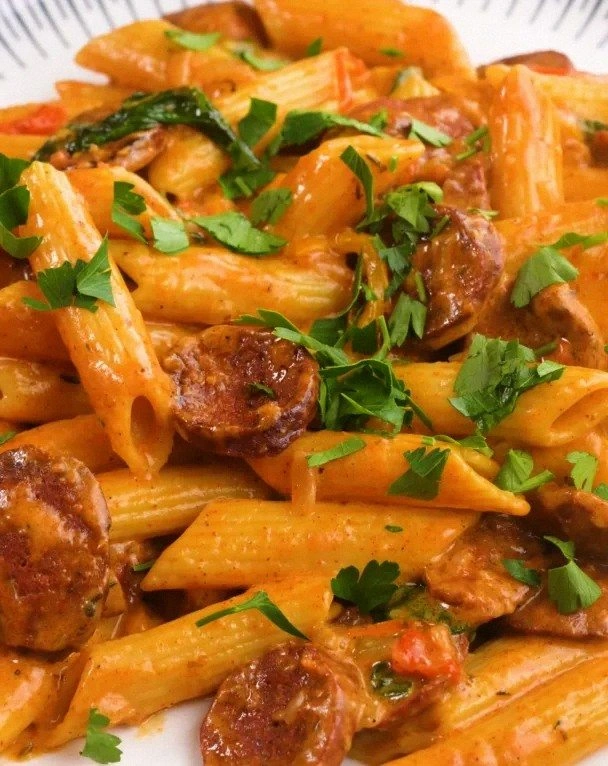
Picture this: it’s a rainy Thursday, the kind of night that makes you want to stay in, order takeout, and binge on a comfort dish that feels like a warm hug. I was standing in front of the stove, eyes flicking between the empty fridge and the stack of unopened boxes of pasta, when a sudden craving for something smoky, spicy, and creamy hit me like a bolt of lightning. I had the ingredients on hand—smoked sausage, pasta, a handful of spices—and decided to throw everything into one pot. The result? A dish that practically sings with flavor, a sauce that clings to noodles like velvet, and a finish that makes you wonder why you ever bothered with separate pans. I dare you to taste this and not go back for seconds.
I’ll be honest—when I first cooked this, the kitchen smelled like a carnival of Cajun spices and sautéed vegetables. The sizzle of olive oil and the sharp, bright scent of bell peppers filled the air, while the heavy cream bubbled with a sweet, almost buttery aroma that promised indulgence. The sound of the pot clinking against the burner was a subtle cue that the magic was happening. The texture was already forming in my mind: the pasta would be al dente, the sausage would be crisp on the edges, and the spinach would wilt into a glossy green. I could almost taste the peppery kick of the cayenne pepper, the savory depth of the chicken broth, and the sharp tang of Parmesan melting into a silky sauce.
What makes this version stand out from every other recipe out there? First, it’s a one-pot wonder—no separate skillet, no extra dishes, just pure, unadulterated flavor that comes together in minutes. Second, the smoked sausage is the star, bringing smoky depth that pairs perfectly with the bright, fiery Cajun seasoning. Third, the sauce is a luscious blend of heavy cream and Parmesan that coats the pasta like a silky blanket, while the fresh spinach adds a pop of color and nutrition. Fourth, the recipe is incredibly forgiving; if you’re short on time, you can skip the sausage and still end up with a delicious dish. Fifth, the dish is crowd-pleasing—whether you’re feeding a family or entertaining guests, it’s a guaranteed hit. Sixth, the cooking method is simple yet effective: sauté, simmer, stir, and serve. Finally, it’s versatile—swap in chicken or shrimp, or tweak the spice level to match your mood.
I’m not just talking about any pasta dish; this is a culinary experience that will make you wonder how you ever cooked pasta any other way. By the end of this post, you’ll have the confidence to master every step, the knowledge to tweak it to your taste, and the inspiration to experiment with variations. Let me walk you through every single step—by the end, you’ll wonder how you ever made it any other way.
What Makes This Version Stand Out
- Flavor: The smoked sausage delivers a deep, smoky undertone that cuts through the richness of the cream and balances the heat from the Cajun seasoning. The combination of garlic powder and cayenne pepper provides a subtle, layered heat that doesn’t overwhelm the palate.
- Texture: The pasta remains al dente, giving a pleasant bite, while the sausage’s edges crisp to a satisfying crunch. The sauce’s silky consistency coats every strand, creating a luxurious mouthfeel.
- Simplicity: With all ingredients cooked in a single pot, cleanup is minimal. No separate pans or utensils—just a trusty saucepan and a wooden spoon.
- Uniqueness: Most pasta recipes rely on tomato-based sauces or simple butter, but this dish fuses Cajun heat with creamy richness, a combination rarely seen in quick weeknight meals.
- Crowd Reaction: Friends who taste this often say, “I can’t believe this is so simple,” and they keep coming back for more. The dish is a guaranteed conversation starter at any gathering.
- Ingredient Quality: Using smoked sausage and fresh spinach elevates the dish’s flavor profile, turning a quick meal into a gourmet experience.
- Cooking Method: The one-pot technique ensures that every flavor is absorbed by the pasta and the sauce, creating a harmonious blend.
- Make-ahead Potential: The dish holds up well in the fridge for up to three days, and you can easily reheat it without losing its creamy texture.
Alright, let's break down exactly what goes into this masterpiece. And before we dive deeper, here’s a quick kitchen hack that will elevate your cooking game.
Inside the Ingredient List
The Flavor Base
The foundation of this dish starts with the smoked sausage. The smoky flavor is the backbone, providing depth that pairs beautifully with the bright, peppery Cajun seasoning. When you cut the sausage into thin rounds, you not only speed up cooking but also allow the heat to permeate the sauce more effectively. If you skip the sausage, the dish loses its smoky character, turning it into a plain creamy pasta that feels less adventurous.
The Texture Crew
Pasta, diced bell peppers, diced onion, and fresh spinach form the textural ensemble. The pasta should be 4 ounces per serving—enough to satisfy without overpowering the sauce. Bell peppers add a sweet crunch that balances the heat, while onions contribute a subtle sweetness when sautéed. Spinach, added at the end, wilts into a glossy green that offers a slight earthiness, preventing the dish from feeling too heavy.
The Unexpected Star
Heavy cream and Parmesan cheese are the creamy duo that transforms the dish into a luscious experience. Heavy cream provides a silky mouthfeel, while Parmesan adds a sharp, nutty tang that cuts through the richness. Together, they create a sauce that clings to the pasta like velvet. If you’re watching calories, you can replace half the cream with Greek yogurt for a lighter version, but be careful not to add too much yogurt, or the sauce will curdle.
The Final Flourish
Garlic powder, cayenne pepper, and chopped parsley finish the dish with aromatic layers and a pop of color. Garlic powder offers a subtle, consistent garlic flavor without the risk of burning, while cayenne pepper brings a measured heat that keeps the dish exciting but not overwhelming. Parsley is not only decorative but also adds a fresh, herbaceous note that lifts the overall profile.
Everything's prepped? Good. Let's get into the real action.
The Method — Step by Step
- Heat a large, heavy‑bottomed pot over medium heat and drizzle in one tablespoon of olive oil. As the oil warms, add the thinly sliced smoked sausage. Sauté until the sausage releases its oils and the edges begin to brown—about 3–4 minutes. This step is the flavor foundation; let the sausage caramelize slightly to build depth.
- Add the diced bell peppers and onion to the pot. Stir frequently and let the vegetables soften, about 2 minutes. The bell peppers should still hold a bit of crunch, while the onion will turn translucent, releasing its natural sweetness. The aroma at this stage will have you humming along.
- Sprinkle in the Cajun seasoning, garlic powder, and cayenne pepper. Toss everything together so the spices coat the sausage and vegetables evenly. The mixture should start to smell fragrant and slightly spicy; this is the moment of truth where the dish starts to come alive.
- Pour in the low‑sodium chicken broth, then bring the mixture to a gentle simmer. The broth dilutes the spices and creates a base for the sauce. Allow it to simmer for 5 minutes, giving the flavors time to meld. The pot should be bubbling softly, not a rolling boil.
- Add the pasta, stirring to ensure it’s fully submerged in the liquid. Reduce heat to low, cover the pot, and let the pasta cook for 8–9 minutes, or until it reaches al dente. Stir occasionally to prevent sticking. The pasta will absorb the broth, becoming flavorful and tender.
- When the pasta is almost done, pour in the heavy cream and sprinkle the Parmesan cheese. Stir vigorously until the cheese melts and the sauce thickens, forming a glossy coating over the noodles. The sauce should coat the pasta like a silky blanket, not be too runny.
- Add the fresh spinach and let it wilt into the sauce—about 1–2 minutes. The spinach will reduce dramatically, adding a subtle green color and a boost of vitamins. This step also helps to thicken the sauce slightly.
- Taste the sauce and adjust seasoning if necessary. If you prefer more heat, sprinkle a bit more cayenne pepper. If the sauce feels too thick, add a splash of chicken broth or water to reach your desired consistency. The final dish should have a balanced heat, creamy richness, and a vibrant green accent.
- Turn off the heat, sprinkle chopped parsley over the top, and give everything one last gentle stir. Let the dish rest for a minute; this allows the flavors to settle and the sauce to thicken slightly. The aroma at this point will be intoxicating—smoky, spicy, and creamy all at once.
- Serve hot, ladling the pasta straight from the pot into bowls. Garnish with extra parsley if desired, and enjoy the symphony of flavors. The dish is best served immediately, while the sauce is still silky and the pasta is hot.
That’s it—you did it. But hold on, I've got a few more tricks that will take this to another level. Before we wrap up, let’s dive into some insider tips that will make you a pasta‑making maestro.
Insider Tricks for Flawless Results
The Temperature Rule Nobody Follows
Many people cook pasta directly in the sauce, but this can cause the pasta to become mushy. Instead, cook the pasta in a separate pot of salted water until al dente, then drain and add it to the sauce. This keeps the noodles firm and ensures the sauce doesn’t over‑reduce.
Why Your Nose Knows Best
Before adding the heavy cream, pause and sniff the pot. If the aroma feels too sharp, let the sauce simmer a bit longer to mellow the spices. Your nose is a reliable guide to balance flavor intensity.
The 5‑Minute Rest That Changes Everything
After you finish cooking, let the dish sit covered for five minutes. The pasta will absorb any remaining liquid, and the sauce will thicken to the perfect consistency. It also allows the flavors to meld beautifully.
Use a Stainless‑Steel Pot for Better Heat Distribution
Stainless‑steel pots distribute heat more evenly than cast iron, preventing hot spots that can scorch the sauce. If you don’t have one, a heavy‑bottomed non‑stick pan will work, but be cautious with the heat.
Keep an Eye on the Broth Level
If the broth evaporates too quickly, the sauce may become too thick or burn. Add a splash of water or broth as needed to maintain a silky consistency. A quick splash of water before reheating also helps when storing leftovers.
Why You Should Use Low‑Sodium Broth
Low‑sodium broth allows you to control the salt level precisely. If you’re watching sodium intake, this is a crucial tweak. You can always add a pinch of salt later, but you can’t take it away once it’s in the pot.
Creative Twists and Variations
This recipe is a playground. Here are some of my favorite ways to switch things up:
Spicy Shrimp Kick
Swap the smoked sausage for sautéed shrimp. The shrimp’s delicate flavor pairs wonderfully with the Cajun heat, creating a lighter yet equally satisfying dish. Add a pinch of paprika for an extra layer of smokiness.
Vegetarian Version
Use a plant‑based sausage or omit sausage entirely. Add extra veggies like zucchini, mushrooms, or kale to increase volume. The creamy sauce will still coat everything beautifully.
Low‑Carb Twist
Replace the pasta with spiralized zucchini or shirataki noodles. The dish will remain creamy and flavorful while cutting down on carbs. Adjust the cooking time to prevent the noodles from becoming mushy.
Cheesy Extravaganza
Add a handful of shredded mozzarella or a drizzle of cream cheese to the sauce. The additional cheese will deepen the creamy texture and give the dish a richer flavor profile.
Herb‑Infused Delight
Introduce fresh thyme or oregano during the sauté stage. These herbs bring an earthy note that balances the Cajun spices and enhances the overall aroma.
Breakfast‑Style Variation
Serve the dish over a bed of scrambled eggs instead of pasta. This turns the recipe into a hearty breakfast that’s both satisfying and full of flavor.
Storing and Bringing It Back to Life
Fridge Storage
Store leftovers in an airtight container for up to three days. The sauce will thicken slightly in the fridge, so add a splash of water or broth when reheating to restore its silky texture.
Freezer Friendly
You can freeze the dish for up to two months. Portion into freezer‑safe containers, leaving a little headspace for expansion. Thaw overnight in the fridge before reheating.
Best Reheating Method
Reheat in a saucepan over low heat, stirring constantly. Add a tablespoon of water or broth to loosen the sauce. Keep the heat low to avoid curdling the cream.