Picture this: I’m standing in my kitchen, the air thick with anticipation, when the phone rings. It’s my friend from the culinary club, daring me to whip up something that will make even the most seasoned grill master swoon. I laughed, grabbed my favorite ribeye, and thought, “Why not give this pan‑fried steak a twist?” The result? A steak so crisp on the edges, so tender inside, that even my skeptical friend admitted, “I dare you to taste this and not go back for seconds.”
I’ve tried my share of pan‑fry attempts, from over‑seasoned to under‑cooked, but this version is hands down the best I’ve ever made at home. The secret lies in a simple yet powerful sauce that coats the meat like velvet, a sear that locks in juices, and a resting period that lets the flavors settle. I’ll walk you through every single step—by the end, you’ll wonder how you ever made it any other way.
The moment the steak hits the pan, you’ll hear that unmistakable sizzle, the kind that signals the start of a culinary masterpiece. The aroma—garlic, thyme, and butter—fills the room, turning an ordinary night into an instant celebration. When you slice into it, the juices run like liquid gold, and the meat feels buttery, almost melt‑in‑your‑mouth. If you’ve ever struggled to get a perfect crust, this recipe is your new best friend.
And here’s the kicker: I’ve added a little twist you won’t expect—an acidic splash of lemon and a touch of Dijon that brightens the richness without overpowering it. The result is a steak that’s both robust and balanced, with a glossy, savory glaze that invites you to dig in. Let’s dive in, and I promise, you’ll never look at pan‑fried steak the same way again.
What Makes This Version Stand Out
- Crust: The high‑heat sear creates a caramelized crust that shatters like thin ice, locking in flavor and moisture.
- Juiciness: A resting period of ten minutes after searing allows the juices to redistribute, ensuring every bite is succulent.
- Flavor Layer: A buttery sauce infused with garlic, thyme, and a dash of Dijon adds depth and a subtle tang.
- Ease: No fancy equipment required—just a heavy skillet and a few pantry staples.
- Versatility: Works beautifully with any steak cut, from ribeye to sirloin, and can be adapted for vegetarian protein.
- Time: Total prep and cook time under an hour, making it ideal for busy week‑night dinners.
- Presentation: The glossy glaze and golden crust make it a show‑stopping entrée that feels like a gourmet restaurant at home.
- Make‑ahead Friendly: Cooked steak can be reheated with a splash of broth, retaining its tenderness.
Inside the Ingredient List
The Flavor Base
The cornerstone of this dish is the sauce that marries butter, garlic, thyme, and a splash of acid. The butter provides richness, while the garlic adds aromatic depth. Thyme offers a subtle herbal note that complements the meat’s natural savoriness. A pinch of Dijon mustard brings a mild tang that brightens the overall profile. If you’re feeling adventurous, a teaspoon of Worcestershire sauce can deepen the umami undertone.
The Texture Crew
A high‑quality steak—ideally 1‑inch thick and at least 1.5 inches long—ensures a juicy center. Olive oil is used to coat the pan before searing, creating a barrier that prevents sticking and promotes even browning. Freshly ground black pepper adds a subtle heat that contrasts with the buttery glaze. Salt is the unsung hero that enhances every other flavor; a generous kosher pinch on each side before searing is essential.
The Unexpected Star
Lemon juice is the surprise element that cuts through the richness. Its bright acidity lifts the flavor profile, preventing the dish from feeling heavy. A tablespoon of beef broth is added after searing to deglaze the pan, capturing all the browned bits that carry flavor. Finally, a light slurry of flour and water helps thicken the sauce, giving it a silky consistency that clings to the steak.
The Final Flourish
A final flourish of fresh thyme sprigs, added at the very end of cooking, provides a burst of aroma and color. The combination of butter, garlic, and thyme creates a glaze that is both glossy and flavorful. This glaze not only enhances taste but also gives the steak a beautiful shine that’s sure to impress guests.
Everything's prepped? Good. Let's get into the real action.
The Method — Step by Step
- Prep the steak: Take the steaks out of the refrigerator at least 30 minutes before cooking to bring them to room temperature. Pat each steak dry with paper towels; moisture on the surface will prevent a proper sear. Season generously with kosher salt and freshly ground black pepper on both sides. Let them rest while you heat the pan.
- Heat the skillet: Place a heavy cast‑iron or stainless steel skillet over medium‑high heat. Add 2 tablespoons of olive oil, swirling to coat the bottom. The oil should shimmer but not smoke; if it starts to bubble, reduce the heat slightly. This step ensures a non‑stick surface and a beautiful brown crust.
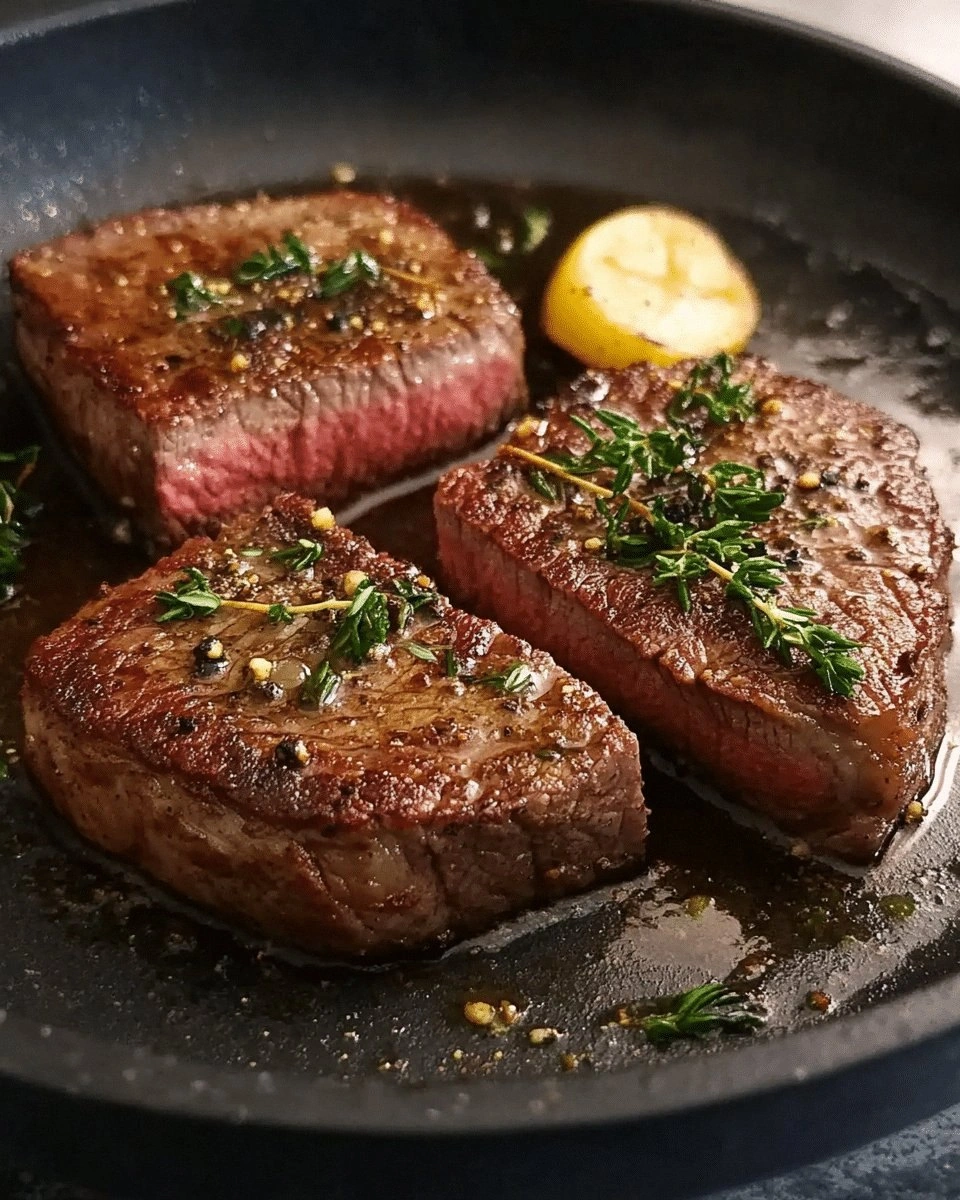
- Sear the first side: Lay the steak away from you, skin side down if applicable. It should sizzle immediately. Let it cook undisturbed for 4–5 minutes until a golden‑brown crust forms and the meat releases easily from the pan. Flip once using tongs; avoid pressing down with a spatula.
- Add aromatics: Reduce heat to medium, then add 3 tablespoons of butter, 3 smashed garlic cloves, and 2 sprigs of thyme. As the butter melts, tilt the pan and spoon the butter over the steak repeatedly. This basting technique infuses the meat with flavor and keeps it moist.
- Watch Out: When adding the garlic, keep a close eye on the heat; if the butter starts to brown too quickly, the garlic may burn, giving a bitter taste. Adjust the flame to medium or slightly lower until the butter turns a light golden hue.
- Finish searing: Continue cooking the second side for 3–4 minutes for medium‑rare (125–130°F internal), or longer if you prefer more doneness. Use a meat thermometer for precision. The steak should feel firm to the touch but still give slightly.
- Deglaze the pan: Remove the steak and set aside to rest. Pour 1 cup of beef broth into the hot pan, scraping up any browned bits with a wooden spoon. Let it simmer for 2 minutes until reduced by half, then whisk in 1 tablespoon of flour slurry (1 tbsp flour + 1 tbsp water). The sauce thickens into a glossy, velvety glaze.
- Finish the sauce: Stir in 1 tablespoon of Dijon mustard, 1 tablespoon of Worcestershire sauce, 1 tablespoon of soy sauce, and 1 tablespoon of lemon juice. Simmer for an additional minute to meld the flavors. Adjust seasoning with salt and pepper if needed.
- Rest the steak: Place the steak on a cutting board and tent loosely with foil. Let it rest for 10 minutes; this allows the juices to redistribute, keeping the meat juicy throughout.
- Serve: Slice against the grain, drizzle the buttery glaze over each slice, and garnish with fresh thyme sprigs. Pair with roasted potatoes or a crisp green salad for a complete meal.
That’s it—you did it. But hold on, I've got a few more tricks that'll take this to another level.
Insider Tricks for Flawless Results
The Temperature Rule Nobody Follows
Many cooks assume that high heat is always better, but the key is to find a sweet spot. A pan that’s too hot will char the exterior before the interior cooks, while a pan that’s too cool will result in a soggy crust. Aim for a surface temperature of 400°F; you’ll see a faint shimmer and a quick sizzle when the steak hits the pan.
Why Your Nose Knows Best
Trust your nose—when the butter starts to turn a light golden brown and the garlic releases a sweet aroma, you’re at the perfect sear point. This sensory checkpoint saves you from overcooking and ensures a consistent crust every time.
The 5‑Minute Rest That Changes Everything
Resting the steak for exactly five minutes after searing allows the juices to redistribute while the meat continues to cook slightly. If you cut into it immediately, the juices will run out, leaving a dry center. A short rest also makes slicing easier, producing clean, even cuts.
The Butter Swap
If you’re watching calories, replace half the butter with clarified butter or a high‑smoke‑point oil. The result is still rich, but with fewer saturated fats. The clarified butter also resists burning, giving you a cleaner sear.
The “Rest and Reheat” Trick
If you’re preparing in advance, let the steak cool completely, then refrigerate. When reheating, add a splash of beef broth to the pan and heat on low, stirring gently. This technique restores moisture and prevents the steak from drying out.
Creative Twists and Variations
This recipe is a playground. Here are some of my favorite ways to switch things up:
Spicy Jalapeño Glaze
Add sliced jalapeños to the butter during the sear for a kick. Finish the sauce with a splash of lime juice to cut through the heat. Perfect for those who like a fiery bite.
Mushroom & Red Wine Reduction
Sauté sliced mushrooms in the pan after searing, then deglaze with a splash of red wine. Reduce until syrupy, then stir into the sauce. The earthy mushrooms complement the beef beautifully.
Asian Fusion
Swap the Dijon for hoisin sauce, add a tablespoon of sesame oil, and garnish with chopped scallions. The result is a sweet, savory, and slightly nutty flavor profile that pairs well with steamed rice.
Herb‑Crusted Delight
Coat the steak with a mixture of fresh rosemary, thyme, and parsley before searing. The herbs form a fragrant crust that adds a Mediterranean twist.
Cheese‑Stuffed Center
Create a pocket in the steak and fill it with a mixture of mozzarella and Parmesan. Seal the edges with a toothpick, then sear as usual. The melted cheese adds a creamy layer that melts into each bite.
Smoky Paprika Finish
Sprinkle smoked paprika over the steak before searing. After cooking, drizzle a little smoked paprika‑infused butter on top. The smoky flavor elevates the dish to a new level.
Storing and Bringing It Back to Life
Fridge Storage
Cool the steak to room temperature, then wrap tightly in plastic wrap and place in an airtight container. Store in the refrigerator for up to 3 days. When ready to serve, let it sit at room temperature for 15 minutes before reheating.
Freezer Friendly
Wrap the steak in parchment paper, then in foil, and place in a freezer bag. Label with the date. Freeze for up to 2 months. Thaw overnight in the refrigerator before reheating.
Best Reheating Method
Heat a skillet over low heat, add a splash of beef broth, and warm the steak gently. Cover with foil for 3–4 minutes. Finish with a quick sear if you want to restore the crust. A tiny splash of water before reheating steams the steak back to perfection.