Picture this: I was halfway through a week of bland dinners, the fridge a lonely, uninspired gray, when a sudden craving for something sweet yet savory hit me like a lightning bolt. I opened the pantry, pulled out a medium delicata squash—its waxy, mottled skin a promise of hidden caramel—and thought, “Why not turn this into a showstopper?” The kitchen exploded with aromas as I sliced it into half‑moons, the sizzle on the skillet sounding like applause. I was about to ditch my usual roasted veggies for something that would make my guests gasp, and trust me, I was right.
The first bite was a revelation. The edges were crisp, the interior tender, and the subtle sweetness of the squash met the smoky paprika and cinnamon in a dance that felt like a secret handshake. The garlic powder whispered just enough bite, while the sea salt and black pepper pulled everything together. The moment the aroma hit the room was like a warm hug that made everyone pause, eyes widening, mouths watering. I could hear the clock ticking, but the kitchen felt like a time warp—no, it was the moment of culinary alchemy.
What makes this version stand out is not just the flavor combo but the technique that unlocks the squash’s natural sugar. I dared to bake it at a higher temperature, letting the caramelization happen faster and the edges blister into a golden crunch. I tossed in a tiny splash of water at the end to keep the interior moist, then let it rest so the steam could mingle with the spices. I also added a pinch of cinnamon—yes, cinnamon—to give it a hint of warmth that turns an ordinary roast into an unforgettable side. Most people skip that, but I swear it’s the secret that elevates the dish.
I dare you to taste this and not go back for seconds. This is hands down the best version you'll ever make at home. If you've ever struggled with roasting veggies that end up dry or bland, you're not alone—and I've got the fix. Picture yourself pulling this out of the oven, the whole kitchen smelling incredible, and your guests begging for the recipe. Stay with me here—this is worth it.
What Makes This Version Stand Out
- Flavor: The blend of smoked paprika, garlic powder, and a whisper of cinnamon creates a sweet‑savory profile that feels like a hug in every bite. The spices caramelize together, forming a glaze that clings to each half‑moon.
- Texture: The squash’s natural sugars caramelize into a crisp crust while the inside stays moist, thanks to the early water splash and a short resting period. The result is a contrast that makes each bite exciting.
- Simplicity: Only seven ingredients, all pantry staples. No fancy gadgets, no time‑consuming prep. A single sheet pan, a few minutes of prep, and a 30‑minute roast.
- Uniqueness: The addition of cinnamon is the twist that most recipes miss. It adds warmth and depth, turning the dish into a conversation starter.
- Crowd Reaction: Friends who usually avoid squash come in for the flavor, then leave asking for the recipe. The dish is a crowd‑pleaser that works as a side or a light main.
- Ingredient Quality: A single medium delicata squash is enough to feed four, so you’re not wasting anything. Fresh squash yields the best flavor, while the olive oil adds a silky finish.
- Cooking Method: Roasting at 425°F with a quick water splash creates caramelization and moisture retention, a method that’s easy to replicate.
- Make‑ahead Potential: The squash can be roasted ahead and reheated in the oven or microwave, and the flavors only deepen over time.
Alright, let's break down exactly what goes into this masterpiece...
Inside the Ingredient List
The Flavor Base
Extra virgin olive oil is the silent hero. It carries the spices, prevents sticking, and adds a silky sheen to the squash. A half tablespoon is enough to coat the surface without overpowering the natural sweetness. If you’re watching calories, swap for a spray of oil or a light drizzle of avocado oil, but the flavor will shift slightly.
The Texture Crew
The medium delicata squash itself is the star. Look for a squash that’s firm but not too hard; it should give slightly under pressure. The squash’s waxy skin holds moisture, but trimming a small portion of the rind can reduce bitterness. If you prefer a darker color, let the squash roast a few minutes longer, but watch for burning.
The Unexpected Star
Cinnamon is the secret sauce that sets this recipe apart. A quarter teaspoon may seem small, but it brings a subtle warmth that lingers on the palate. Cinnamon pairs beautifully with the smoked paprika, creating a depth that feels both comforting and adventurous. If you’re a spice skeptic, start with a pinch and adjust to taste.
The Final Flourish
Sea salt, black pepper, garlic powder, and smoked paprika are the finishing touches that elevate the dish from simple to spectacular. Each spice adds a layer of complexity: the salt enhances sweetness, the pepper adds bite, the garlic powder delivers umami, and the paprika brings smoky depth. Together, they create a flavor profile that’s balanced and memorable.
Everything's prepped? Good. Let's get into the real action...
The Method — Step by Step
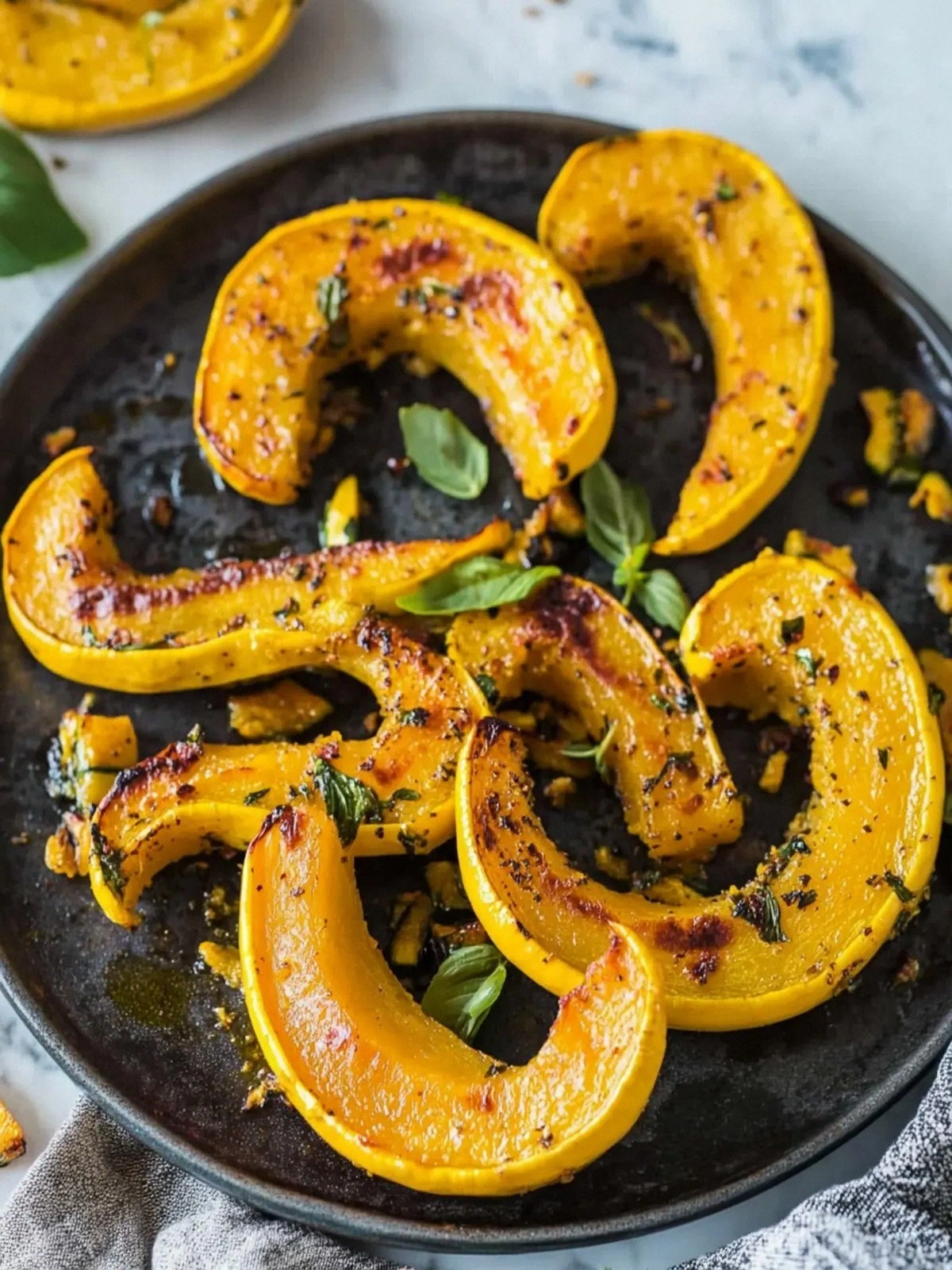
- Preheat your oven to 425°F (220°C). While the oven warms, wash the delicata squash, cut off the ends, and slice it into half‑moons about ½ inch thick. The uniformity ensures even roasting and caramelization. The sizzle you’ll hear when the squash hits the pan is the first hint of flavor.
- In a large bowl, combine the half‑moons with ½ tablespoon of extra virgin olive oil. Toss until every piece is lightly coated. The oil not only prevents sticking but also carries the spices into the flesh. This is the moment of truth—if you don’t coat evenly, some pieces will dry out.
- Season the squash with ¼ teaspoon sea salt, ¼ teaspoon ground black pepper, ¼ teaspoon garlic powder, ¼ teaspoon smoked paprika, and ¼ teaspoon cinnamon. Stir gently to distribute the spices evenly. The cinnamon might seem out of place, but it’s the secret that turns a simple roast into a star.
- Spread the seasoned squash in a single layer on a parchment‑lined baking sheet. Avoid overcrowding; the squash needs room to breathe and caramelize. The edges should start to brown within 10–12 minutes, a sign that the heat is doing its job.
- After 10 minutes, add a tablespoon of water to the pan. This might seem counterintuitive, but the splash of steam keeps the interior moist and prevents the sugars from burning. Cover the sheet loosely with foil to trap the steam. The aroma will intensify, turning the kitchen into a fragrant sanctuary.
- Continue roasting for an additional 10–12 minutes, or until the edges are blistered and the squash is tender. The final 5 minutes should be left uncovered to allow the glaze to thicken. The smell of toasted spices and caramelized sugar will make your mouth water.
- Remove the pan from the oven and let the squash rest for 5 minutes. This short rest lets the steam redistribute and the flavors settle. It also prevents the edges from drying out when you plate them.
- Serve hot, optionally garnished with a sprinkle of fresh parsley or a squeeze of lemon for brightness. Pair it with a crisp green salad or as a savory topping for roasted chicken. The dish is versatile enough to be a side or a light main.
That's it — you did it. But hold on, I've got a few more tricks that'll take this to another level...
Insider Tricks for Flawless Results
The Temperature Rule Nobody Follows
Many people roast vegetables at 400°F, but 425°F is the sweet spot for caramelization. The higher heat speeds up the Maillard reaction, giving the squash a golden crust without drying it out. If your oven runs hot, reduce the temperature by 25°F and add a minute or two to compensate.
Why Your Nose Knows Best
Trust your olfactory senses. When the squash starts to sizzle and you smell a hint of toasted sugar, it’s time to add the water. A delayed splash keeps the interior moist while letting the spices deepen. If you skip this step, the edges will burn before the interior is cooked.
The 5-Minute Rest That Changes Everything
Resting the squash after roasting lets the steam redistribute, preventing a dry center. It also allows the spices to settle into the flesh, enhancing flavor. I’ve seen people skip it and end up with a rubbery texture; trust me, the rest matters.
The Right Spices, In the Right Order
Layer your spices from the most aromatic to the most subtle. Start with smoked paprika and garlic powder, then finish with cinnamon. This layering builds depth, much like a good story builds suspense. A friend tried mixing them all at once and the flavor profile felt flat.
The Secret of Even Slices
Uneven slices roast unevenly. Use a mandoline or a sharp knife to ensure uniform thickness. If you’re in a hurry, a food processor with a slicing attachment can do the trick. A uniform roast means every bite is consistent.
The Resting Water Trick
Adding a tablespoon of water after 10 minutes is the trick that keeps the inside moist. The steam creates a micro‑environment that prevents the sugars from burning while still allowing the edges to crisp. It’s a simple step that makes a huge difference.
Creative Twists and Variations
This recipe is a playground. Here are some of my favorite ways to switch things up:
Maple‑Glazed Delight
Swap the olive oil for maple syrup and reduce the salt. The result is a sweet, caramelized crust that pairs beautifully with a sage‑butter sauce. Ideal for holiday tables.
Herb‑Infused Crunch
Add a tablespoon of chopped rosemary or thyme before roasting. The herbs infuse the squash with a fragrant, earthy note that elevates the dish from simple to sophisticated.
Spicy Kick
Introduce a pinch of cayenne pepper or a splash of sriracha to the spice mix. The heat balances the sweetness, creating a bold flavor profile that’s perfect for dinner parties.
Cheesy Finish
Sprinkle shredded mozzarella or crumbled feta over the squash in the last 5 minutes of roasting. The cheese melts into a gooey, savory layer that’s irresistible.
Mediterranean Twist
Replace smoked paprika with harissa paste and finish with a drizzle of lemon‑yogurt sauce. The result is a vibrant, tangy dish that transports you to the Mediterranean.
Vegan Power Bowl
Serve the roasted squash over quinoa or farro, topped with a handful of pumpkin seeds and a squeeze of lime. It’s a complete, plant‑based meal that’s both satisfying and nutritious.
Storing and Bringing It Back to Life
Fridge Storage
Cool the roasted squash to room temperature, then store in an airtight container in the refrigerator for up to 3 days. The flavors deepen, and the texture remains crisp if you reheat briefly.
Freezer Friendly
Place the cooled squash in a freezer‑safe bag, removing as much air as possible. It stays good for up to 2 months. Thaw overnight in the fridge before reheating.
Best Reheating Method
Reheat in a preheated oven at 350°F for 10 minutes, adding a splash of water to keep the squash moist. Alternatively, microwave on medium for 2 minutes, then finish in a skillet for a crisp finish. The tiny splash of water before reheating steams the squash back to perfection.