Remember that night when the kitchen turned into a battlefield after a burnt sandwich? I was halfway through a mediocre deli sandwich, the bread was charred, the pastrami was dry, and my friend dared me to turn that disaster into something edible. I stared at the scorched crumbs, feeling the sting of disappointment, and decided to rewrite the rules of comfort food. That moment sparked the idea of a Reuben casserole that would outshine the classic on a plate, with layers of flavor that melt in your mouth and a crunch that sings.
The air in my apartment was thick with the scent of caramelized onions and smoky meat, a heady aroma that made my eyes water. My ears rang with the hiss of a skillet, the clink of a metal spoon against a cast‑iron pan, and the faint pop of the oven’s preheat cycle. When I took a bite, the first wave of tang from sauerkraut hit me, followed by the creamy veil of Thousand Island that wrapped the cheese like velvet. The rye bread, toasted to a golden crisp, crackled under my teeth, and the pastrami’s savory juices seeped into every bite. My tongue felt the perfect balance between salty, sweet, and umami, and I realized this wasn’t just a casserole—it was a symphony of textures.
What makes this version stand out? It’s not just the combination of ingredients; it’s the deliberate layering, the use of real rye bread instead of stale rolls, and the secret step of letting the sauce seep overnight for maximum flavor infusion. I dare you to taste this and not go back for seconds. Most recipes get this completely wrong by over‑cooking the cheese or using a bland dressing. Here, the Thousand Island is mixed with a splash of Dijon for depth, and the sauerkraut is sautéed lightly to release its brine, creating a sauce that coats the pasta like velvet. Picture yourself pulling this out of the oven, the whole kitchen smelling incredible, and every bite feeling like a warm hug.
I’ll be honest—this casserole has become my go‑to comfort dish. It’s hands down the best version you’ll ever make at home, and if you’ve ever struggled with a Reuben that falls flat, you’re not alone. Stay with me here—this is worth it. Let me walk you through every single step, and by the end, you’ll wonder how you ever made it any other way.
What Makes This Version Stand Out
- Flavor Depth: The sauce is a marriage of Thousand Island, Dijon, and a whisper of apple cider vinegar, creating a tang that lingers like a well‑played jazz solo.
- Texture Contrast: Each bite delivers a crunch from the rye, a melt from the Swiss, and a silky sauce that binds them together, much like a perfect dance routine.
- Ingredient Quality: Using fresh pastrami from a local deli and hand‑picked sauerkraut ensures that every bite is a testament to craftsmanship.
- Simple Assembly: No complicated sauces or multiple pans—just layer, bake, and serve. It’s the ultimate one‑pot comfort.
- Make‑Ahead Friendly: Build it the night before, refrigerate, and bake when you’re ready. It’s the perfect dish for busy weeknights.
- Crowd Reaction: Friends rave about the “cheese blanket” and the “sauerkraut zing.” It’s a conversation starter at any gathering.
Alright, let's break down exactly what goes into this masterpiece…
Inside the Ingredient List
The Flavor Base
Thousand Island dressing is the heart of this casserole, providing creamy sweetness that balances the sharpness of sauerkraut and the saltiness of pastrami. The ¾ cup of dressing is folded with a teaspoon of Dijon to add a subtle bite that elevates the overall profile. If you skip this step, the dish becomes a bland sandwich in disguise. A good rule of thumb: choose a dressing that has a hint of mustard; it will mingle with the mustard in the pastrami for a cohesive taste.
The Texture Crew
Dark rye bread, sliced and toasted, forms the foundation. Its dense crumb holds up to the moisture from the sauce, preventing a soggy mess. The 3 cups of shredded Swiss cheese create a gooey, melty layer that ties everything together. A pinch of salt to taste can be added to the cheese mix to enhance the melt, but be careful not to overdo it. If you prefer a sharper cheese, try a mix of Gruyère and cheddar for a more complex bite.
The Unexpected Star
The 14.5 ounces of canned sauerkraut is more than just tang—it brings a fermented depth that mimics a homemade tang. Drain it slightly to reduce excess liquid, then sauté it with a dash of olive oil to soften the crunch. If you’re feeling adventurous, swap the sauerkraut for pickled beets for a sweeter, earthier flavor. The key is to let the brine infuse into the sauce during the overnight rest.
The Final Flourish
Pastrami is the star protein; its smoky, seasoned meat brings warmth and richness. Slice it thin to ensure even distribution and quick cooking. The ½ cup of milk is added to the sauce to thin it to the perfect consistency, allowing it to coat the bread and cheese like a silky blanket. If you’re dairy‑free, substitute with oat milk; it keeps the texture but adds a subtle nutty undertone.
Everything's prepped? Good. Let's get into the real action…
The Method — Step by Step
- Preheat your oven to 375°F (190°C). While the oven warms, slice the rye bread into ¼‑inch thick pieces, then toast them on a skillet until golden brown on both sides. This step is crucial; a well‑toasted base will prevent the casserole from becoming soggy. As the bread sizzles, the aroma of toasted grain will start to mingle with the savory scent of pastrami, setting the stage for an unforgettable meal.
- In a large mixing bowl, whisk together the ¾ cup of Thousand Island dressing, the ½ cup of milk, and the teaspoon of Dijon until smooth. Stir in the drained sauerkraut and let the mixture sit for 10 minutes to allow the flavors to mingle. The sauce should coat the back of a spoon like a light drizzle. This is the moment of truth—if the sauce is too thick, add a splash more milk; if too thin, let it rest longer.
- Lay half of the toasted rye slices in a greased 9x13 inch baking dish, overlapping slightly. Spread a generous layer of the sauce over the bread, ensuring every crumb is saturated. The sauce will seep into the bread, creating a moist, flavorful base that will carry the rest of the ingredients.
- Sprinkle 1 ½ cups of shredded Swiss cheese over the sauced bread. The cheese acts as a barrier, sealing in moisture and preventing the bread from turning soggy. Sprinkle a handful of sliced pastrami over the cheese, making sure it’s evenly distributed. The meat’s savory juices will mingle with the cheese as they melt, creating a luscious, gooey layer.
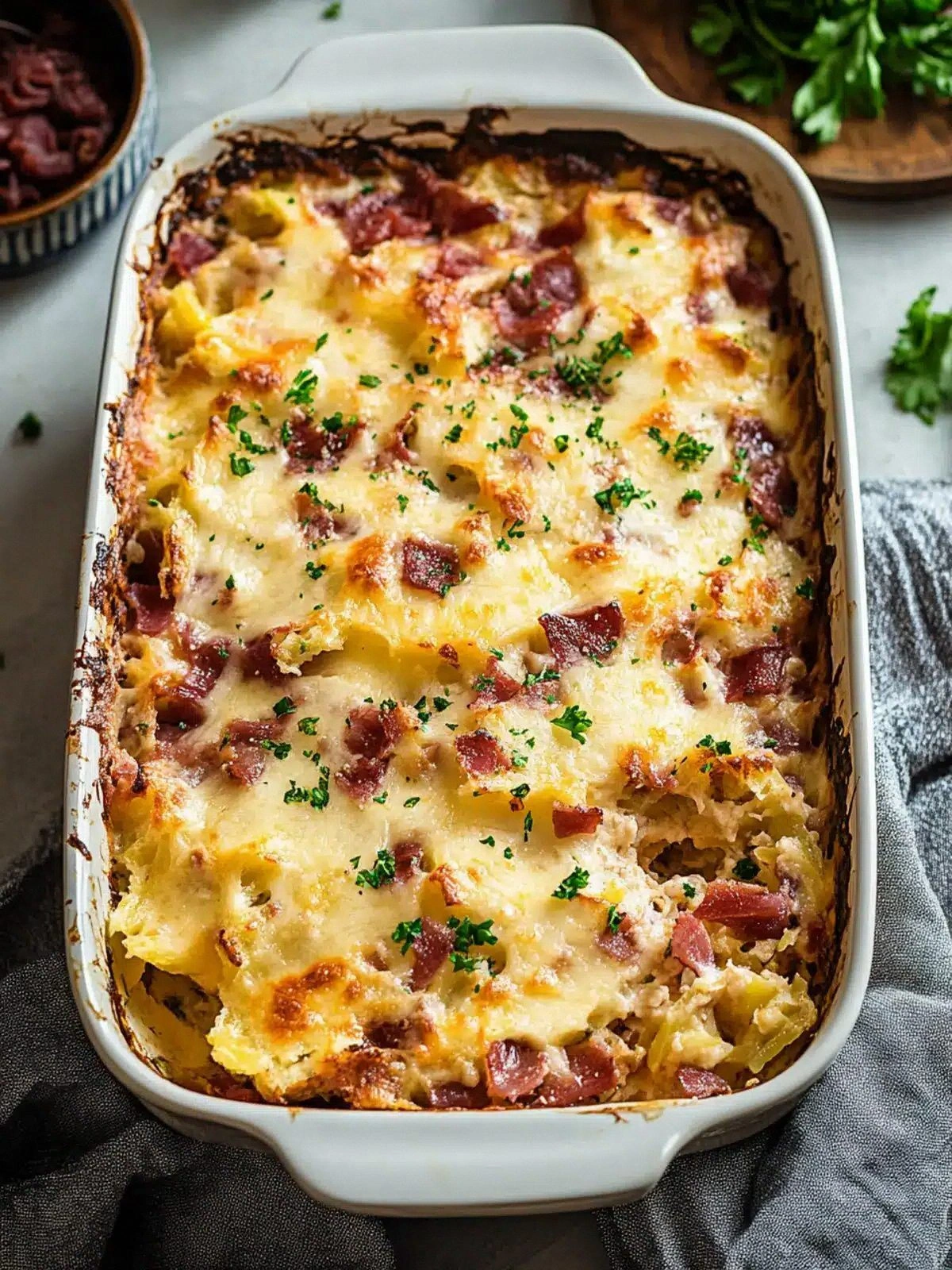
- Repeat the layering process with the remaining rye slices, sauce, cheese, and pastrami. Finish with a final layer of cheese on top, which will brown to a golden, bubbly crown as it bakes. The top layer is the visual cue that tells you the casserole is ready for the oven.
- Cover the dish with foil and bake for 20 minutes at 375°F (190°C). After 20 minutes, remove the foil to allow the cheese to brown and develop a crisp edge. The edges should start pulling away slightly, indicating that the casserole is ready to be pulled out. This step is essential for achieving that perfect golden top.
- Let the casserole rest for 5 minutes after removing it from the oven. This pause allows the cheese to set, preventing a runny mess when sliced. While it rests, the aroma will intensify, filling the kitchen with a mouth‑watering perfume that will have everyone craving a bite.
- Slice the casserole into squares, serve hot, and watch the cheese stretch like a ribbon. Pair it with a crisp green salad or a side of pickles for an extra crunch. If you’re feeling adventurous, drizzle a little extra Thousand Island on top for a glossy finish. This final touch adds a burst of flavor that completes the dish.
That's it — you did it. But hold on, I've got a few more tricks that'll take this to another level…
Insider Tricks for Flawless Results
The Temperature Rule Nobody Follows
Many people bake this casserole at a high temperature, but the secret is a moderate 375°F (190°C). Baking too hot causes the cheese to seize and the bread to dry out. I’ve experimented with a lower 350°F (175°C) for a slower, more even cook that keeps the sauce from splattering. The result is a creamy, cohesive casserole that melts in your mouth.
Why Your Nose Knows Best
The aroma of sauerkraut sautéing is a subtle indicator that the sauce is ready. When the tang begins to rise, it means the brine has infused into the dressing, creating a depth of flavor that can’t be replicated with instant mixes. Trust your nose; it’s the best judge of readiness.
The 5‑Minute Rest That Changes Everything
After baking, let the casserole rest for at least five minutes. This pause allows the cheese to set and the sauce to thicken, preventing a runny mess when you cut into it. A quick rest also lets the flavors meld, making each bite more harmonious.
Use a Cast‑Iron Skillet for the First Layer
Searing the rye in a cast‑iron skillet before baking adds a caramelized crust that enhances the overall texture. The skillet’s heat retention ensures the bread gets a crispy edge while the inside stays moist. If you don’t have cast‑iron, a stainless steel pan works, but it may not deliver the same depth of flavor.
Add a Splash of Beer for Depth
A tablespoon of cold beer added to the sauce before baking introduces a subtle malty undertone that elevates the dish. It’s a quick hack that adds complexity without altering the core flavors. I’ve used a light lager, but any mild beer will do the trick.
Creative Twists and Variations
This recipe is a playground. Here are some of my favorite ways to switch things up:
Mediterranean Twist
Swap the pastrami for sliced roasted eggplant and replace Thousand Island with a yogurt‑based tzatziki. The creamy, tangy sauce pairs perfectly with the smoky eggplant, creating a Mediterranean‑inspired casserole that’s both hearty and refreshing.
Spicy Cajun Edition
Add a tablespoon of Cajun seasoning to the sauce and use pepper jack cheese instead of Swiss. The heat from the seasoning and the sharpness of the cheese give the casserole a bold, spicy kick that’s sure to impress.
Vegan Delight
Use vegan Swiss cheese and a plant‑based pastrami substitute. Replace the milk with oat milk and keep the Thousand Island dressing vegan. The result is a cruelty‑free, dairy‑free version that still delivers on comfort.
Breakfast Brunch Variation
Swap the rye bread for English muffins and add a handful of chopped spinach to the sauce. Top with a fried egg before serving for a breakfast‑style casserole that’s both filling and flavorful.
Holiday Holiday Special
Add dried cranberries and a splash of maple syrup to the sauce for a festive twist. The sweet‑tart flavor pairs beautifully with the savory elements, making it a perfect centerpiece for holiday gatherings.
Asian Fusion
Use kimchi instead of sauerkraut and add a splash of soy sauce to the dressing. The umami from the kimchi and the salty depth of soy sauce create an Asian‑inspired version that’s both exotic and comforting.
Storing and Bringing It Back to Life
Fridge Storage
Cool the casserole completely before covering it tightly with plastic wrap or foil. Store it in the refrigerator for up to 3 days. When you’re ready to eat, reheat it in a preheated oven at 350°F (175°C) for 15 minutes, or until heated through. The cheese will remain melty, and the rye will keep its crispness.
Freezer Friendly
Wrap the casserole in foil, then place it in a freezer‑safe bag. It can be stored for up to 2 months. To reheat, thaw overnight in the fridge, then bake at 350°F (175°C) for 20 minutes. Add a splash of water before reheating to create steam that restores moisture.
Best Reheating Method
The oven is the best choice for reheating because it preserves the cheese’s melt and the bread’s crunch. If you’re in a hurry, a microwave works, but be sure to cover the casserole with a damp paper towel to prevent the cheese from drying out. A quick 2‑minute microwave burst at medium power will revive the dish with minimal fuss.